
RV removal can feel overwhelming—especially if your rig is old, damaged, or no longer roadworthy. Whether you’ve got a broken-down motorhome in the driveway or an abandoned trailer on a property you just bought, understanding your options for safe, legal, and affordable removal is essential. This guide walks you step-by-step through the RV removal process so you can clear the space quickly and confidently.
Why RV removal is more complicated than a typical tow
Unlike standard vehicles, recreational vehicles combine elements of housing, utilities, and transportation. That makes RV removal a bit more complex than just calling a regular towing company.
Factors that affect removal:
- Size and weight: Many RVs exceed the limits of standard tow trucks.
- Condition: Non-running, water-damaged, or burned-out units often require special equipment.
- Location: Narrow driveways, backyards, soft ground, and rural areas can complicate access.
- Hazardous materials: Propane, batteries, fuel, refrigerants, and old fluids must be handled properly.
Because of this, RV removal is usually handled by specialized haulers, junk removal companies, or scrapyards equipped to safely dismantle or transport larger vehicles.
Step 1: Decide what you actually want done with the RV
Before you call anyone, clarify your goal. “RV removal” can mean different things:
-
Complete hauling and disposal
The company removes the RV and handles everything—transport, dismantling, and recycling or disposal. This is ideal when the RV is at the end of its life. -
Purchase and pickup (cash for RVs)
If your RV still has value, some buyers or salvage yards will pay you and tow it away. This applies to:- Units with working engines
- Rigs with valuable components (generators, appliances, solar, etc.)
- Late-model RVs with cosmetic rather than structural damage
-
On-site demolition (“tear down”) and haul-away
When an RV can’t be moved safely (extreme rot, frame damage, burned units), companies may dismantle it on-site and haul off the debris.
Knowing which outcome you want helps you find the right RV removal service and get accurate quotes.
Step 2: Understand your legal responsibilities
Even when a company handles the physical RV removal, you often remain legally responsible for certain aspects until the process is complete.
Key points to consider:
-
Title and ownership:
You’ll usually need to provide proof of ownership and sign over the title or a bill of sale. Without paperwork, your options may be limited to scrap/demolition in some areas. -
Registration and plates:
In many states/provinces, you should remove your license plates and cancel registration/insurance once the RV is hauled away. Check your local DMV/licensing agency for rules. -
Local codes and HOA rules:
Some cities and homeowner associations restrict where RVs can be stored and how long inoperable vehicles can sit. These same regulations may affect how removal and demolition are handled on-site. -
Environmental regulations:
Propane, refrigerants (from fridges/AC units), and fluids like oil and coolant must be disposed of according to local and federal requirements (see guidance from the U.S. EPA for hazardous waste handling (source)).
If in doubt, ask potential RV removal providers how they handle compliance and documentation.
Step 3: Prepare the RV for safe removal
Getting the RV ready can save you time, reduce your cost, and avoid last-minute delays. Most companies appreciate a unit that’s prepped and easy to access.
Basic preparation checklist
-
Remove personal belongings:
Clothing, tools, dishes, paperwork, and valuables should all be cleared out. Companies typically charge extra to empty units. -
Secure loose items:
Anything left inside that might shift during towing should be secured or removed to prevent damage or spillage. -
Disconnect and secure utilities:
- Turn off and disconnect shore power
- Unplug from water and sewer hookups
- Close and cap any external connections
-
Drain or disclose tanks:
- Freshwater, gray, and black tanks: Ask if they need to be emptied in advance. Some haulers prefer you drain them; others can handle it as part of the service.
- Fuel tanks: For motorhomes, clarify how much fuel is in the tank and whether it runs.
-
Deal with propane:
- Turn off valves
- Remove loose portable tanks, if you’re keeping them
- Let the removal company know how many tanks are attached and their size
-
Clear access paths:
Trim branches, move vehicles, and ensure gates and driveways are wide enough for a tow truck or flatbed to get in and out.
Step 4: Choose the right RV removal option for your situation
The best solution depends on your RV’s condition, your timeline, and your budget.
1. RV salvage yards and recyclers
If your RV still has usable components, a salvage yard may offer free pickup or even pay a small amount.
Best for:
- Older but intact RVs
- Units with good appliances, generators, engines, or frames
- Owners who want some cash and don’t mind a basic “as-is” removal
Questions to ask:
- Do you offer free towing?
- Will you pay for the RV? If so, how much and when?
- What paperwork do you require?
2. Junk RV removal services
These are specialized companies that handle everything from non-running motorhomes to gutted travel trailers.
Best for:
- Severely damaged or mold-infested RVs
- Burned-out or stripped units
- Abandoned RVs on private property (with proof you can authorize removal)
What they typically offer:
- Flat-rate or upfront quote
- Towing, loading, and transport
- Recycling or disposal of materials and hazardous components
3. General junk removal companies
Some general junk haulers will handle RV removal, especially for smaller trailers, pop-ups, or campers. Not all have the equipment for large Class A motorhomes, though.
Best for:
- Smaller or lighter RVs
- Situations where you’re also removing other debris (sheds, furniture, trash)
4. DIY sale or part-out
If you have time and the RV has some valuable components, you might:
- Sell it as a “mechanic’s special” or “for parts” and require the buyer to tow it away
- Remove high-value parts yourself (generator, solar, batteries, appliances) and then call a scrap hauler for the shell
This can maximize value but requires more effort and some mechanical savvy.
Step 5: Get and compare RV removal quotes
To avoid surprise costs, always request at least two or three estimates. Most RV removal providers will ask:
- What type of RV is it? (Class A, B, C, fifth wheel, travel trailer, truck camper, etc.)
- Approximate length and weight
- Current condition (running, non-running, severely damaged, burned, etc.)
- Location details:
- On a street, driveway, backyard, storage lot, or rural property?
- Any access challenges or soft ground?
- Title status: Do you have the title or proof of ownership?
What to look for in a quote
-
Clear pricing structure:
- Flat fee, per-mile fee, or hourly charge
- Any extra costs for demolition, cleanup, or difficult access
-
What’s included:
- Towing/hauling
- Dismantling or cutting up the RV (if needed)
- Disposal and recycling fees
- Labor to empty trash or contents (if you leave items inside)
-
Insurance and licensing:
Make sure the company is properly insured and, where required, licensed to haul and scrap vehicles.
What happens during professional RV removal?
On removal day, the process usually follows a clear sequence:
-
Final walkthrough and paperwork
You’ll review the RV, confirm the agreed price, and sign necessary documents (title transfer, bill of sale, or service agreement). -
Safety and prep on-site
The crew will:- Confirm utilities are disconnected
- Inspect for obvious hazards (leaks, wasp nests, loose parts)
- Position the truck and equipment
-
Loading or dismantling
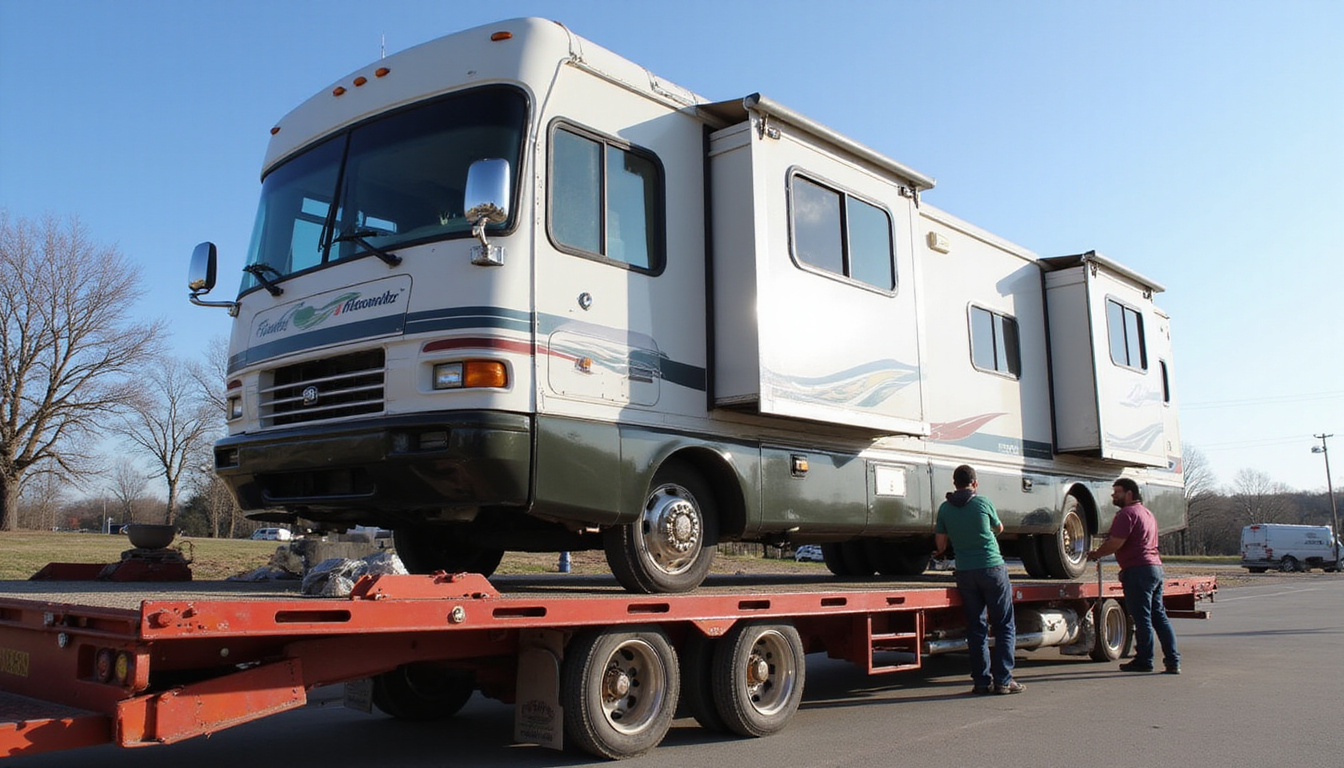
- Towable RVs: Hitched to a truck or winched onto a flatbed
- Motorhomes: Towed, flat-bedded, or sometimes partially dismantled
- Severely damaged units: Cut into manageable sections for removal
-
Site cleanup
Reputable RV removal providers will:- Pick up debris created during the process
- Remove loose panels, glass, and scrap
- Leave the area broom-clean or close to original condition
-
Proof of removal
Ask for:- A receipt or invoice showing the RV was removed
- A copy of title paperwork or junk/salvage documentation, if applicable
Keep these for your records, especially if there were HOA or city code issues involved.
How much does RV removal cost?
Costs vary widely based on location, size, condition, and distance, but general ranges look like this:
-
Small campers/pop-ups:
Often $150–$400, sometimes less if scrap value is decent. -
Mid-size travel trailers and Class B/C RVs:
Commonly $300–$800, depending on condition and distance. -
Large fifth wheels and Class A motorhomes:
$600–$1,500 or more, especially for complex access or on-site demolition.
You may pay less—or even earn money—if:
- The RV runs and can be driven or easily towed
- Valuable parts can be resold or recycled
- You live near a salvage yard that needs inventory
Conversely, you may pay more if:
- The RV is burned, collapsed, or structurally unsound
- It’s stuck in mud, behind buildings, or in a tight backyard
- It’s filled with garbage or household items the company must remove
Environmental and recycling considerations in RV removal
A responsible RV removal process doesn’t just haul the vehicle away; it also minimizes environmental harm.
Commonly recycled components:
- Metal framing and aluminum siding
- Steel chassis
- Copper wiring and some electronics
- Certain plastics and glass
Hazardous materials that must be handled carefully:
- Propane tanks and lines
- Lead-acid or lithium batteries
- Refrigerants from AC units and fridges
- Oil, coolant, and transmission fluids
- Mold- or asbestos-containing materials in very old units
When comparing providers, ask how they handle recycling versus landfill disposal. Many reputable RV removal companies partner with specialized recyclers to reduce waste.
Quick checklist: Before you schedule RV removal
Use this list to streamline the process:
- [ ] Decide if you want cash for the RV, simple removal, or demolition
- [ ] Locate your title or proof of ownership
- [ ] Check local rules (city, county, HOA) about vehicle removal
- [ ] Remove all personal items and trash
- [ ] Disconnect power, water, and sewer
- [ ] Turn off and secure propane
- [ ] Note any access challenges (fences, tight turns, soft ground)
- [ ] Get 2–3 written or texted quotes from RV removal companies
- [ ] Confirm what’s included in the price and ask about extra fees
- [ ] Schedule a date and keep your phone handy on removal day
RV removal FAQs
How do I get rid of an old RV that doesn’t run?
For a non-running rig, your best options are typically a specialized RV removal service or a salvage yard that offers towing. Provide photos and details (size, condition, location) to get an accurate quote. If the RV still has valuable parts, you may be able to sell it “as-is” to a buyer who will arrange their own pickup.
Is RV disposal different from RV removal?
Yes. RV removal refers to getting the RV off your property—towing or hauling it away. RV disposal focuses on what happens next: dismantling, recycling metals and components, and legally handling hazardous waste. Many companies do both, but it’s worth confirming that your provider handles disposal responsibly and in compliance with local regulations.
Can I hire someone to tow my RV to a scrapyard instead of full-service removal?
In many cases, yes. You can hire a towing company or independent hauler for simple transport and then work directly with a scrapyard or recycler. This approach can sometimes be cheaper but puts more responsibility on you to arrange disposal, transfer ownership, and ensure environmental rules are followed.
Clear your space and move on: Take action on RV removal today
An unwanted RV can drain your time, money, and space—especially if it’s deteriorating or violating local codes. With the right RV removal plan, you can turn a frustrating eyesore into a clean, usable area in just a day or two. Start by gathering basic information about your rig, then reach out to a few reputable haulers or salvage yards for quotes. The sooner you schedule RV removal, the sooner you’ll reclaim your driveway, yard, or property and get peace of mind knowing the job was done safely and legally.
Junk Guys San Diego
Phone: 619-597-2299
Website: www.junkguyssd.com
Email: junkguyssd619@gmail.com