
Planning a pool table removal can feel daunting. Between the slate, frame, felt, and rails, pool tables are heavy, delicate, and expensive to replace. Whether you’re rearranging a room, moving homes, or preparing a space for renovation, doing it the right way is critical for safety and for protecting your investment.
This guide walks you step by step through safe pool table removal, from preparation and disassembly to moving, loading, and reassembly. You’ll learn when a DIY move might be realistic, when to call in professionals, and how to avoid the most common (and costly) mistakes.
Understanding the Challenges of Pool Table Removal
Pool tables are deceptively complex pieces of furniture. Knowing what you’re dealing with will help you choose the safest approach.
Why Pool Tables Are Hard to Move
Several factors make pool table removal difficult:
- Weight: A standard 8-foot slate pool table can weigh 650–1,000+ pounds, depending on whether it has a one-piece or three-piece slate.
- Fragility: Slate can crack or chip if mishandled. Legs and frame joints can also be damaged by uneven lifting.
- Size and shape: The table’s length and width make it awkward to navigate through doorways, tight corners, stairs, and hallways.
- Precision assembly: Even minor warping or misalignment can affect play. Incorrect reassembly means an uneven playing surface and loose rails.
Because of this combination of weight, fragility, and required precision, pool table removal is rarely as simple as “four strong people and a dolly.”
DIY vs Professional Pool Table Removal: How to Decide
Before picking up a single tool, decide whether to handle the move yourself or hire pros.
When DIY Removal Might Be Reasonable
You might consider a DIY approach if:
- You have 4–6 able-bodied helpers.
- The move involves short distances on the same floor.
- You’re comfortable with basic tools and following detailed instructions.
- You have protective gear, moving blankets, and a suitable vehicle (for full moves).
That said, even a short-distance move still usually requires partial disassembly for safety.
When It’s Safer to Hire Professionals
Professional pool table movers are strongly recommended if:
- The table has slate (most quality tables do).
- The move involves stairs, elevators, tight turns, or long distances.
- The table is antique, custom, or particularly high value.
- You plan to sell the table and want proof of professional handling.
- You don’t have enough help or the right moving equipment.
Specialized pool table movers have slate lifters, levelers, padding, and experience leveling and re-felting tables—things most homeowners don’t. For many people, the cost is minor compared to the risk of cracked slate or personal injury.
Tools and Supplies You’ll Need
If you decide to proceed with DIY pool table removal (or even partial prep before the movers arrive), gather your tools first. Having everything ready will keep the process safer and more efficient.
Basic tool and supply checklist:
- Power drill or screwdriver set (Phillips and flathead bits)
- Socket wrench set
- Staple remover or flathead screwdriver (for felt staples)
- Needle-nose pliers
- Moving blankets and furniture pads
- Heavy-duty tape or stretch wrap
- Labeling tape and marker (for organizing parts)
- Zip-top bags or small containers (for screws and bolts)
- Safety goggles and gloves
- Furniture dollies (rated for heavy loads)
- Lifting straps (optional but helpful)
- Measuring tape (to check doorways and paths)
- Plastic sheeting or cardboard (to protect floors)
For a full relocation, you’ll also need:
- A truck or van with sufficient length for slate pieces and frame
- Straps and tie-downs to secure components during transit
Step-by-Step Guide to Safe Pool Table Disassembly
Disassembly is the most crucial part of pool table removal. Done correctly, it protects both the table and the people moving it.
Important: Always unplug and remove any electrical accessories (like ball return systems) before you begin.
1. Clear the Area and Plan the Path
- Remove cues, balls, racks, and any accessories.
- Clear at least a 3–4 foot perimeter around the table.
- Walk the entire path from the table to the door and to the moving vehicle.
- Measure doorways and hallways to ensure components will fit.
If any doorways are too small, plan to remove doors from their hinges temporarily.
2. Remove Pockets and Rails
Most tables follow this general sequence:
-
Pockets:
- Look under the table where pockets attach.
- Depending on design, they may be held by screws, staples, or bolts.
- Carefully unscrew or pry staples loose.
- Place all fasteners in labeled bags.
-
Rails:
- Rails are typically attached with bolts from below.
- Use a socket wrench to loosen and remove bolts.
- Lift rails gently; many rails are connected in sections.
- Label sections (e.g., “Head rail,” “Foot rail,” “Left side 1”) to simplify reassembly.
Place rails and pockets on soft surfaces or wrap them in moving blankets immediately.
3. Detach and Protect the Felt
Felt is one of the most delicate parts of the table. Whether you remove or preserve it depends on your future plans.
-
If you plan to reuse the felt:
- Carefully locate and remove staples or adhesive points using a staple remover or flathead screwdriver.
- Gently pull the felt back, avoiding stretching or tearing.
- Roll (don’t fold) the felt and store it in a protective tube or wrap.
-
If you plan to re-felt the table:
- You can remove felt more quickly since you’re not preserving it.
- Still avoid ripping violently; excessive force can damage the slate surface.
Professional installers often recommend replacing felt any time you disassemble a table, especially if it’s older or worn (source: Brunswick Billiards).
4. Remove Slate Screws and Slate Pieces
With the felt off, you’ll see the slate and the screws securing it.
-
Locate and remove screws:
- Slate screws are usually along the perimeter and sometimes in the center.
- Use the appropriate bit on a power drill.
- Place all screws in a labeled bag.
-
Separate the slate sections:
- Many tables have three-piece slate; some have a single large piece.
- Mark each section (e.g., “Center,” “Left,” “Right”) and note its orientation.
- Slate is extremely heavy; always use multiple people to lift each piece.
- Lift straight up and then move to a padded area or directly to a dolly.
-
Protect slate:
- Wrap each piece in moving blankets or thick padding.
- Stand slate pieces on edge (never flat on the ground for long periods) to reduce the risk of cracking.
5. Disassemble the Frame and Legs
Once the slate is off, the frame and legs are relatively straightforward:
- Remove any crossbeams or supports as indicated by visible bolts or screws.
- Detach legs from the frame using a wrench or drill.
- Keep hardware grouped with its corresponding part (e.g., tape hardware bags to the legs).
Wrap each leg and frame section in blankets to prevent dings and scratches.
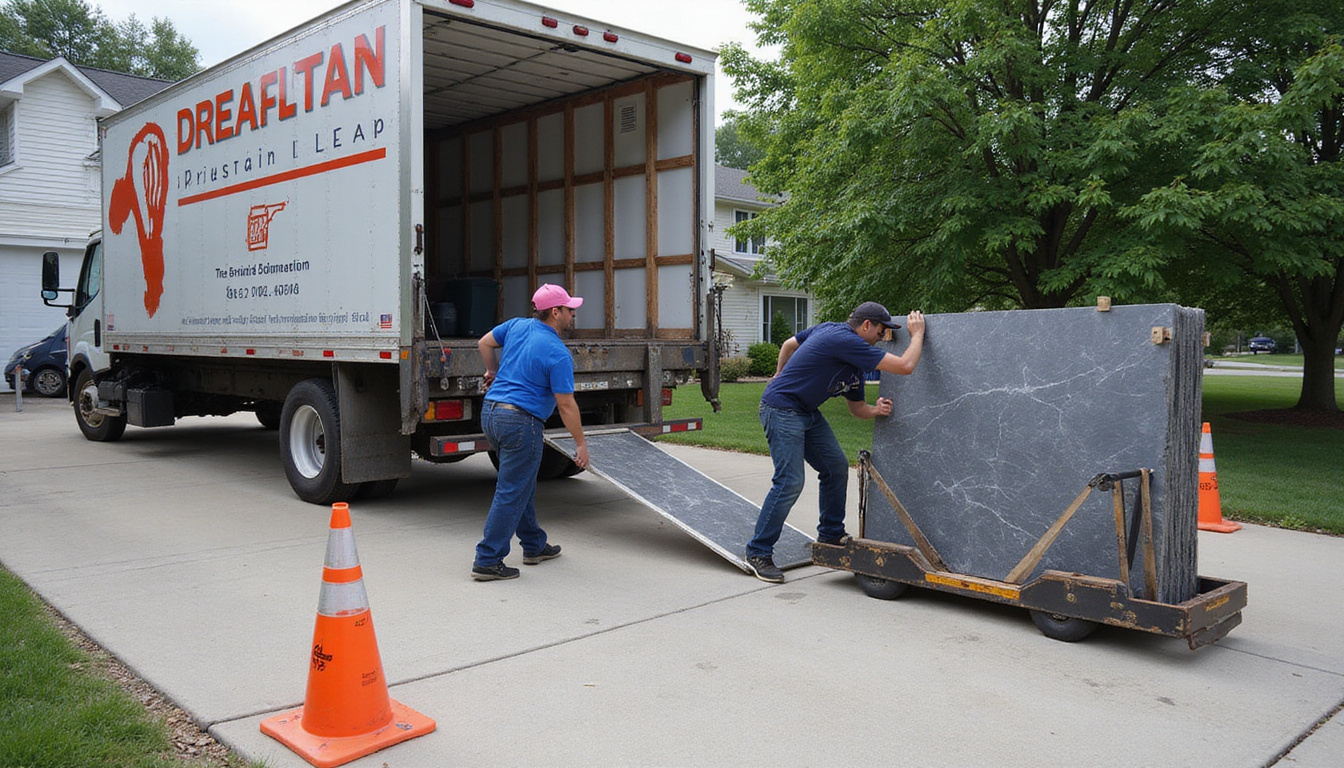
Moving and Transporting the Disassembled Pool Table
Now that everything is broken down, the focus shifts to safe handling and transport.
Safe Lifting Techniques
Even disassembled components can be very heavy. To reduce injury risk:
- Lift with your legs, not your back.
- Keep the item close to your body.
- Coordinate and count down with helpers before lifting.
- Use dollies and lifting straps whenever possible instead of brute force.
Never attempt to move slate with fewer than two strong adults per piece; three or four is better for large slates.
Protecting Your Home and Vehicle
- Lay cardboard or rugs along high-traffic paths and door thresholds.
- Use corner guards or blankets on tight doorways.
- In the vehicle, load slate first, against a solid surface.
- Secure all components with ratchet straps or tie-downs to prevent shifting.
Avoid stacking heavy items on top of slate or the frame during transport.
Reassembly and Leveling at the New Location
Reassembly is basically the disassembly process in reverse, but alignment and leveling are critical for good play.
Setting Up the Frame and Legs
- Assemble the frame and legs in the final position you want, leaving space around the table to work.
- Use a carpenter’s level to check the top edges of the frame before adding slate.
- Shim legs as needed to get the frame roughly level.
Installing and Leveling the Slate
- Position slate sections on the frame in the same order and orientation they were removed.
- Ensure seams are tight and flush.
- Use shims under slate corners or centers to achieve precise leveling.
- Fill seams with appropriate seam filler (if recommended by the manufacturer) and smooth carefully.
- Re-check level across multiple points on the slate surface.
This step can make or break play quality. Improperly leveled or supported slate leads to rolls and dead spots.
Re-Felting and Rail Installation
If reusing the old felt, ensure it’s clean and undamaged. If installing new felt:
- Stretch felt evenly across the slate, starting from the center and working outward.
- Smooth out all wrinkles before stapling or gluing edges.
- Reinstall rails in their labeled positions, tightening bolts firmly but not excessively.
Once complete, roll a ball gently across different areas of the table to check for irregularities.
Common Mistakes to Avoid During Pool Table Removal
Avoiding a few key missteps can save you significant time and money.
- Trying to move the table intact: This often leads to cracked slate, broken legs, or warped frames.
- Underestimating the weight: Moving slate without enough help is a major injury risk.
- Skipping labeling: Unlabeled parts make reassembly frustrating and imprecise.
- Neglecting protection: Unwrapped slate, rails, and legs are easily chipped or scratched.
- Improper leveling: Rushing through leveling during reassembly leads to poor play and potential structural stress.
- Ignoring manufacturer guidance: Whenever possible, consult the original manual or maker’s instructions for your specific model.
When in doubt, it’s safer and often cheaper long-term to bring in professional pool table movers.
Quick Checklist for Stress-Free Pool Table Removal
Use this short checklist when you’re planning your move:
- Decide DIY vs professional movers.
- Measure doorways, hallways, and stairwells.
- Gather tools, dollies, blankets, and protective gear.
- Clear the area around the table.
- Remove pockets and rails; label everything.
- Carefully remove and store felt (or plan to replace it).
- Remove slate screws; label and wrap slate pieces.
- Disassemble frame and legs; bag and label hardware.
- Protect floors, walls, and doorways during the move.
- Load components securely; transport with slate upright and padded.
- Reassemble frame and slate; level meticulously.
- Install felt and rails; test play and fine-tune leveling.
FAQ: Pool Table Removal and Moving
Q1: How much does professional pool table removal and moving usually cost?
Costs vary by region and complexity, but many professional pool table removal and moving services range from $300 to $800+. Factors include table size, number of stairs, distance between locations, and whether you need new felt or repair work.
Q2: Can I move a pool table without taking it apart?
Moving a table without disassembly is strongly discouraged. Even for short distances, attempting pool table removal without taking off the slate and legs can bend the frame, crack slate, or injure movers. At minimum, remove the slate and legs to reduce stress on the structure.
Q3: How long does pool table moving and setup take?
A full professional pool table removal, transport, and reassembly typically takes 2–4 hours, depending on distance and complexity. DIY moves may take longer, especially if you’re unfamiliar with disassembly and careful leveling.
Make Your Pool Table Removal Safe, Efficient, and Hassle-Free
Moving a pool table is one of those projects that looks straightforward until you’re halfway through lifting a 250-pound slate. With thoughtful planning, the right tools, and a careful step-by-step approach, you can protect your table, your home, and everyone’s backs.
If you’re uncertain at any step—especially with slate handling, leveling, or re-felting—consider partnering with experienced pool table movers. Their expertise can turn a risky, all-day ordeal into a smooth, predictable process.
If you’re ready to simplify your pool table removal, start by assessing your move, gathering what you need, and getting at least one quote from a specialist. A short conversation with a pro today can help you avoid costly damage tomorrow and ensure your table plays beautifully in its new home.
Junk Guys San Diego
Phone: 619-597-2299
Website: www.junkguyssd.com
Email: junkguyssd619@gmail.com