
Load and Go Packing Secrets for Stress-Free Travel and Storage
If you’re tired of overstuffed suitcases, chaotic moving days, or cluttered storage bins, it’s time to embrace a load and go mindset. This simple approach focuses on packing smarter, faster, and lighter—so you can move, travel, or store your belongings with minimal stress and maximum efficiency.
Below you’ll find practical strategies, checklists, and systems that make “grab, load, and go” your new normal—whether you’re catching a flight, heading out for a weekend trip, or organizing a storage unit.
What “Load and Go” Really Means
At its core, load and go is a packing philosophy: everything you need is pre-planned, pre-grouped, and easy to load at a moment’s notice. Instead of rethinking packing from scratch every time, you create repeatable systems.
A load and go approach has three pillars:
- Pre-assembled kits – Travel, cleaning, work, and hobby kits that stay packed.
- Modular containers – Clear bins, cubes, or bags that stack well and are easy to label.
- Standard routines – Simple checklists and sequences you follow every time.
The payoff is huge: less decision fatigue, fewer forgotten items, and dramatically shorter prep time.
Step 1: Audit Your Real-Life Packing Needs
Before you can pack better, you need to know what you actually pack—and how often.
Ask yourself:
- What types of trips or moves do I do most? (weekend trips, business travel, family vacations, seasonal moves, storage clean-outs)
- What items do I almost always bring?
- What tends to cause last-minute stress? (toiletries, cords, kid items, documents)
Make a short list of your 3–5 most common scenarios. This is where your load and go systems will start. There’s no point designing a European backpacking kit if you mostly go on two-night road trips or regularly shuttle items to a storage unit.
Step 2: Build Your Core Load and Go Kits
Kits are the heart of the load and go method. They reduce packing time because you’re not assembling individual items—you’re grabbing a ready-made unit.
1. Travel Essentials Kit
This kit stays packed 24/7 and lives in your suitcase or closet.
Include:
- Travel-size toiletries (all in TSA-compliant sizes if you fly)
- Spare toothbrush, razor, and comb
- Mini first-aid items (bandages, pain reliever, motion sickness tablets)
- Sleep mask and earplugs
- Collapsible reusable water bottle
- Small laundry bag
Replenish anything used as soon as you return, so this kit is always truly load and go.
2. Tech and Cables Kit
Nothing slows you down like searching for chargers.
Pack into a small pouch:
- Phone charger + extra cable
- Laptop/tablet charger
- Universal adapter (if you ever travel abroad)
- Short USB cables for accessories
- Compact power strip or travel plug
Keep this kit in your backpack or work bag; it should be just as ready for a coffee-shop work session as for a long-haul flight.
3. Document and ID Kit
For frequent travelers or people who regularly sign leases, mortgages, or storage agreements, this is essential.
Use a slim zip pouch or document wallet for:
- Passport and backup passport photos
- Copies of ID, insurance, and key credit cards
- Printed itinerary or confirmation numbers (plus a digital copy)
- Pen and a few sticky notes
Store it in a safe yet accessible place so that you can grab it the moment you’re ready to load and go.
4. Car-Based Load and Go Kit
Your vehicle can be a mobile staging area.
Stock a small trunk organizer with:
- Reusable shopping bags
- Basic tools (multi-tool, flashlight, tape)
- Blanket and compact umbrella
- Snacks and bottled water (check expiration dates regularly)
- Extra phone charging cable
This makes last-minute trips, errands, and even emergency moves easier and faster.
Step 3: Use Modular Packing for Travel
Modular packing means breaking your items into categories, then packing each category into its own “module,” such as a packing cube or pouch. This is where load and go efficiency really shines.
Create a Travel Packing Template
Start with a base list you use for nearly every trip:
- 2–4 interchangeable tops
- 2–3 bottoms that match all tops
- 1 outer layer (jacket, sweater, or blazer)
- 1–2 pairs of shoes (one casual, one functional/dressy)
- Underwear and socks for each day + 1–2 extras
- Sleepwear
- Minimal accessories that go with everything
Then, customize based on:
- Weather (add or remove layers)
- Trip length (scale up or down the number of outfits)
- Activities (add workout gear, swimwear, formal wear, etc.)
Pack by Function, Not by Outfit
Instead of packing “Day 1 outfit” and “Day 2 outfit,” pack:
- One cube for tops
- One cube for bottoms
- One cube for undergarments and sleepwear
- One pouch for accessories
- One dedicated hygiene kit (from earlier)
This way, you pull modules in and out without disturbing everything else. It’s organized, visual, and faster—critical for a smooth load and go experience on travel days.
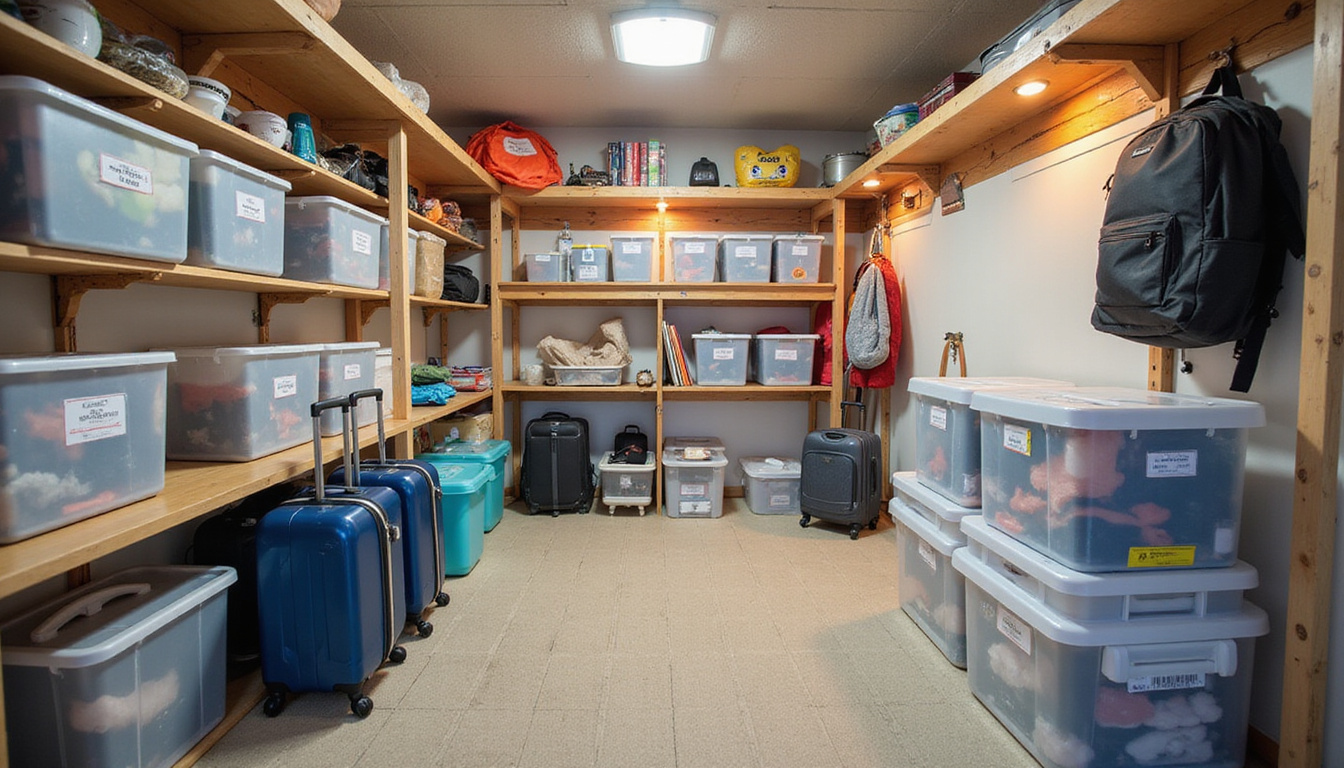
Step 4: Load and Go Strategies for Storage
The same philosophy works beautifully for self-storage, garage organization, or basement shelves.
Pack by Zone and Frequency
Think in terms of location and how often you access things:
- High-access items (used monthly or more): front of storage unit, chest height or higher.
- Seasonal items (used a few times per year): middle zones, clearly labeled.
- Rarely used or archive items (documents, sentimental items): back or top shelves.
This way, when it’s time to load and go for a trip or a move, you can quickly grab from the “high-access” zone instead of digging.
Use Clear Bins and Simple Labels
Opaque boxes hide your progress. Clear bins and direct labels make a huge difference.
On each bin, label:
- Category (e.g., “Winter Gear,” “Camping,” “Kids’ Keepsakes”)
- Sub-list of contents (3–5 key items)
- Owner or room (e.g., “Office,” “Living Room”)
You can use a simple numbering system and keep a digital inventory. For example, “Bin 12 – Camping”. A note in your phone can say: “Bin 12: tent, cook set, lantern, sleeping pads, camp towels.” This makes pre-trip packing almost fully load and go.
Standardize Your Containers
As much as possible, use the same size and style of bin. This makes stacking easier and loading a moving van or truck more efficient and safer.
- Choose 2–3 bin sizes that can stack together.
- Avoid very large bins that get too heavy.
- For fragile items, double-box or add padding, but keep external bin sizes consistent.
The more standardized your containers, the quicker you can load and go during moves or storage swaps.
Step 5: A Simple Load and Go Checklist
To avoid last-minute panic, create a short checklist that covers every type of trip or loading session. You can print and laminate it, or keep it in a note app.
Core Load and Go Checklist
- Confirm dates, addresses, and keys/codes (hotel, Airbnb, storage unit, truck rental).
- Grab pre-packed kits:
- Travel essentials
- Tech and cables
- Documents and ID
- Car-based kit (if driving)
- Pack clothing modules:
- Tops
- Bottoms
- Underwear and sleepwear
- Outerwear
- Add situation-specific items:
- Work materials (laptop, files)
- Kids’ items (diapers, entertainment)
- Hobby gear (camera, sports gear)
- Confirm home prep:
- Lock windows/doors
- Unplug non-essential electronics
- Handle pets and plants
- Quick double-check:
- Phone, wallet, keys
- Medications
- Glasses/contacts
Follow the same order every time and it becomes nearly automatic—a true load and go habit.
Step 6: Time-Saving Habits That Support Load and Go
A few ongoing habits make the entire system smoother.
Keep a Dedicated Travel Drawer or Shelf
Assign one drawer, bin, or shelf for:
- Your suitcase or travel backpack
- Packing cubes
- Pre-packed kits
Nothing else lives there. If a trip comes up, you know that everything on that shelf is ready to load and go into your bag.
Replenish Immediately After Use
When you return from a trip or unpack a storage bin, restock or repair items right away:
- Refill toiletries
- Replace snacks and medications
- Charge and re-pack devices
- Launder and repack commonly used travel clothes
This one habit is the difference between “aspiring” to load and go and actually doing it.
Use a “Staging Zone” at Home
Have a designated area (like a small table or a corner of a room) where you place everything that’s going on the next trip or to storage. Keep it clear for that purpose.
As the date approaches, start building the pile. On departure day, simply load and go from the staging zone to your suitcase, car, or truck.
Common Load and Go Mistakes to Avoid
Even a solid system can be derailed by a few common errors.
- Over-packing: Load and go doesn’t mean “bring everything fast.” Stick to your template.
- Ignoring weight: Heavy bins and bags are hard to load—not stress-free. Err on the lighter side.
- No labels: Unlabeled boxes destroy efficiency. Label before you tape anything shut.
- Procrastinating: The system works best if you do 5–10 minutes of prep a few days before, not 2 hours of panic right before leaving.
According to travel experts, most people use only about half of what they pack on a typical trip (source: U.S. Department of State travel tips). Your goal with a load and go strategy is to know which half that is, and pack mostly that.
Quick-Start List: One Week to a Load and Go Life
If you want a concrete plan, use this simple schedule:
- Day 1: Audit your typical trips and moves. List common destinations and needs.
- Day 2: Build your travel essentials kit.
- Day 3: Build your tech and cables kit.
- Day 4: Create a basic clothing template for short trips.
- Day 5: Set up a travel drawer/shelf and a staging zone.
- Day 6: Standardize 2–3 bin sizes and label at least 3 storage bins.
- Day 7: Write and test your personal load and go checklist on a small outing.
By the end of a week, you’ll have a functioning system that you can refine over time.
FAQ: Load and Go Packing and Storage
Q1: How do I build a “load and go” luggage setup for frequent travel?
Start with a carry-on that always stays half-packed: your travel essentials kit, tech kit, and a small set of neutral, mix-and-match clothing. Keep a master list in the front pocket. When a trip arises, you just add trip-specific items (e.g., event clothes, weather-specific gear), zip up, and load and go.
Q2: Can a load and go system work for self-storage units?
Yes. Use clear bins, label everything, and arrange the unit so frequently used items are at the front and mid-level heights. Group related items (all camping gear together, all holiday decor together), then store by frequency of use. This makes it easy to drive up, grab exactly what you need, and load and go without unpacking the whole space.
Q3: What’s the best way to keep “load n go” moving boxes organized during a move?
Standardize your box sizes and labeling. Use the same 2–3 box sizes and label each with room, key contents, and priority (e.g., “Kitchen – Daily Use – High Priority”). Color-coding by room helps. When you arrive, you can load and go high-priority boxes directly into their rooms and leave low-priority ones in a garage or storage space until you’re ready.
Turn Your Next Trip or Move into a True Load and Go Experience
Stress-free travel and storage aren’t about being ultra-minimalist or obsessively organized—they’re about building a few simple systems you can rely on every time. With pre-packed kits, modular containers, and a short, repeatable checklist, you can transform exhausting packing marathons into a quick, confident load and go routine.
If you’re ready to stop dreading packing days and start enjoying smoother departures, pick one area—travel, your car, or your storage space—and set up your first load and go kit this week. Each small improvement compounds, and before long, you’ll wonder how you ever managed without a system that lets you simply grab, load, and go.
Junk Guys San Diego
Phone: 619-597-2299
Website: www.junkguyssd.com
Email: junkguyssd619@gmail.com