
Moving massive, awkward, or extra-wide freight isn’t just “big trucking”—it’s a specialized discipline known as heavy hauling. Whether you’re transporting construction machinery, wind turbine blades, bridge beams, or industrial equipment, every move involves complex planning, strict regulations, and zero room for error. Done right, heavy hauling keeps projects on schedule and roads safe. Done wrong, it risks injuries, fines, damage, and costly delays.
This guide walks through the essential strategies, best practices, and safety principles that underpin successful heavy hauling operations.
What is heavy hauling?
In transportation, heavy hauling typically refers to moving loads that exceed standard legal size or weight limits. These “oversize” or “overweight” loads require special equipment, permits, and procedures.
Common traits include:
- Weight exceeding standard gross vehicle weight limits
- Width wider than typical lane dimensions (often 8’6" in the U.S.)
- Height exceeding standard bridge clearances
- Length that extends far beyond typical tractor-trailer dimensions
Typical heavy haul loads:
- Excavators, dozers, and cranes
- Transformers and generators
- Bridge girders, steel beams, precast concrete
- Industrial tanks, pressure vessels, and boilers
- Wind turbine blades and nacelles
Because every over-dimensional load interacts differently with roads, bridges, traffic, and weather, heavy hauling is as much an engineering and logistics exercise as it is a driving task.
Planning: the foundation of safe heavy hauling
The most important work in heavy hauling happens before the truck ever moves. Comprehensive planning reduces risk, controls cost, and keeps everyone safe.
1. Start with detailed load information
Accurate load data is non‑negotiable:
- Exact weight (including center of gravity, if available)
- Dimensions: length, width, height
- Load configuration: Is it modular? Can it be partially disassembled?
- Structural characteristics: Fragile areas, lifting/securement points
Any guesswork here can make your permits invalid, your route unsafe, and your equipment selection wrong.
2. Select the right equipment
Matching equipment to the load is central to heavy hauling safety and efficiency:
-
Trailers:
- Lowboys and RGN (removable gooseneck) for tall machinery
- Step-decks for moderately tall freight
- Multi-axle and dual-lane trailers for very heavy, concentrated loads
- Extendable trailers for extra-long items (e.g., blades, beams)
-
Axle configurations:
More axles spread the weight to comply with bridge and roadway limits. This can get extremely specialized for superloads. -
Support equipment:
Pilot/escort vehicles, bucket trucks (for raising utility lines), and sometimes police escorts.
Working with an experienced heavy haul carrier or engineer helps ensure the load is distributed correctly across axles and trailer sections.
3. Build and verify the route
Route planning is where many heavy hauling operations succeed or fail.
Key considerations:
- Bridge and overpass clearances for load height
- Weight-restricted bridges and roads
- Lane width and shoulder conditions for wide loads
- Turning radii on ramps, intersections, and roundabouts
- Construction zones and detours
- Railroad crossings (risk of bottoming out with long wheelbases)
Modern route planning uses a combination of:
- State and provincial route mapping tools
- Engineering reviews for critical bridges
- On-the-ground route surveys for complex moves
Never rely solely on consumer GPS for heavy hauling. A route that works for a box truck may be completely unusable for an oversize combination.
Navigating regulations, permits, and compliance
Oversize and overweight loads are tightly regulated at federal, state/provincial, and sometimes local levels.
1. Understand permitting basics
Most jurisdictions require:
- Oversize/overweight permits specifying:
- Exact dimensions and weights
- Approved routes
- Allowed travel dates and times (e.g., daylight only, no weekends/holidays)
- Escort or police escort requirements
- Special restrictions (e.g., no travel in high winds or heavy rain)
Permits may be:
- Single-trip permits for one specific move
- Annual or blanket permits within pre-approved dimensions/routes
Carriers typically handle permit applications, but shippers should still understand the constraints permits impose on scheduling and routing.
2. Escort and pilot car requirements
For certain dimensions, especially wide, tall, or long loads, escort vehicles are legally required to:
- Warn other motorists
- Help manage lane changes and turns
- Identify hazards (low wires, tree branches, debris)
- Support traffic control at tight intersections
Escort requirements vary by jurisdiction and by how oversize the load is. Make sure your carrier uses properly trained, certified pilot car operators where required.
3. Federal and state safety rules
Beyond oversize permits, heavy hauling must comply with standard commercial vehicle regulations:
- Hours-of-Service (HOS) rules for drivers
- Vehicle inspection and maintenance requirements
- Load securement rules (e.g., FMCSA cargo securement standards in the U.S.)
- Hazardous materials rules when applicable
The U.S. Federal Motor Carrier Safety Administration provides extensive guidance on oversized and overweight commercial vehicles (source: FMCSA).
Engineering safe load securement
A perfectly planned route and permit set still fail if the load shifts or breaks loose. Rigorous securement is central to heavy hauling safety.
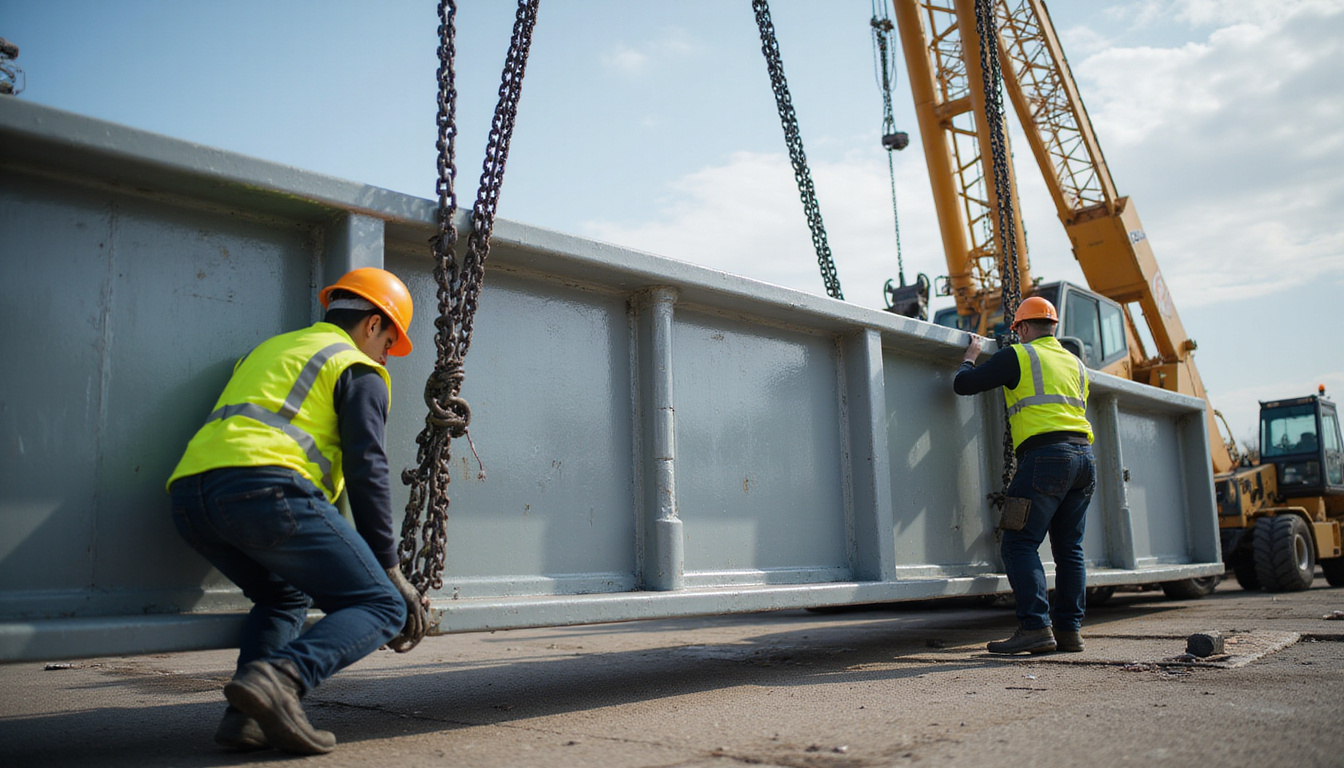
1. Follow (and exceed) securement standards
At minimum, follow applicable cargo securement regulations, but high‑risk loads often warrant exceeding the bare minimum.
Core principles:
- Use securement devices (chains, binders, straps) with sufficient combined working load limit (WLL) to restrain the entire load in all directions.
- Position securement to prevent forward, rearward, lateral, and vertical movement.
- Where possible, secure to manufacturer-designated tie-down points on the equipment or structure.
- For tall or high-center-of-gravity loads, consider additional securement and blocking/bracing.
2. Protect the load and equipment
Use edge protectors and padding where securement could damage:
- Painted or finished surfaces
- Hoses, cables, and hydraulic lines
- Structural members vulnerable to crushing or cutting
Proper blocking and cribbing help spread forces and prevent point loading that can damage both the trailer and the cargo.
3. Conduct inspections at key intervals
Securement should be checked:
- Before departure (pre-trip)
- Within the first 50 miles (or as local regulation dictates)
- At regular intervals thereafter
- After any hard braking, evasive maneuver, or rough road section
Drivers should be trained to recognize loosening, shifting, or developing issues early—before they become dangerous.
Operational best practices on the road
Once the heavy hauling convoy is moving, disciplined execution is critical.
1. Coordinate as a team
Heavy haul moves are team efforts involving:
- Heavy haul driver
- Escort/pilot car operators
- Dispatch and route planners
- Sometimes police or utility support crews
Clear communication protocols (often using dedicated radio channels) ensure:
- Safe lane changes and merges
- Coordinated navigation through tight spaces
- Quick response to unexpected hazards or route issues
2. Set speed and spacing strategically
Oversize and overweight vehicles:
- Have longer stopping distances
- Are more susceptible to rollover, especially with high centers of gravity
- Can react differently to crosswinds and uneven pavement
Best practices:
- Maintain conservative speeds tailored to conditions and load characteristics
- Increase following distance beyond normal trucking norms
- Reduce speed significantly for curves, ramps, and descents
3. Manage challenging conditions
Extra caution is needed in:
- High winds: Dangerous for tall or wide loads; consider delaying moves if thresholds are exceeded.
- Rain, snow, or ice: Reduce speed, increase following distance, and be prepared to suspend movement.
- Darkness: Many jurisdictions restrict oversize travel at night for safety; even where legal, visibility challenges increase risks.
Whenever conditions threaten stability or visibility, the safest move may be to pause the trip.
Choosing the right heavy hauling partner
For shippers, the most important decision is often who handles your heavy hauling.
Critical qualities to look for
-
Proven experience with similar loads
Ask for case studies or references for cargo similar in size, weight, and complexity. -
Strong safety record
Review safety scores, accident history, and compliance track record. -
Engineering and planning capability
Look for in-house or partnered route engineers and permit specialists. -
Versatile equipment fleet
Multi-axle, lowboy, extendable, and specialty trailers indicate readiness for complex moves. -
Transparent communication and documentation
Detailed plans, route maps, risk assessments, and clear pricing suggest professionalism. -
Insurance and risk management
Verify adequate cargo and liability coverage for high-value or critical equipment.
Common mistakes to avoid in heavy hauling
Even seasoned organizations slip into avoidable errors. These are some of the most costly:
- Underestimating lead time for permits, route surveys, and utility coordination
- Assuming “standard” routes are always available, rather than checking current construction and restrictions
- Failing to verify actual load dimensions/weight against permit applications
- Cutting corners on securement to save time
- Ignoring local or municipal regulations that overlay state or federal rules
- Not communicating site constraints (dock height, overhead obstructions, ground conditions) at pickup/delivery locations
Proactively addressing these common pitfalls can save days of delay and tens of thousands of dollars.
Checklist: heavy hauling essentials for a safe move
Use this checklist as a quick reference when planning an oversized transport:
- Confirm exact load weight, dimensions, and center of gravity.
- Decide if disassembly or modularization can reduce oversize classification.
- Match the load to appropriate trailer type and axle configuration.
- Conduct engineering review for load distribution and securement points.
- Plan and validate route, including clearances, weight limits, and turning radii.
- Obtain all necessary oversize/overweight permits (and local approvals if needed).
- Schedule required escorts, police support, or utility assistance.
- Develop a communication plan for driver, escorts, and dispatch.
- Prepare load securement plan exceeding minimum regulatory requirements.
- Conduct full pre-trip inspection of tractor, trailer, securement, and lighting/signage.
- Monitor conditions (weather, traffic, work zones) and adjust schedule if necessary.
- Document the move for future optimization and compliance records.
FAQ: heavy hauling and oversized load transport
1. What is considered a heavy haul load?
A heavy haul load is any shipment that exceeds legal weight or size limits for standard trucking. This can mean being overweight, over‑height, over‑width, over‑length, or a combination. Exact thresholds vary by jurisdiction, but if your cargo requires special permits or equipment to move, it’s typically considered heavy hauling.
2. How much does heavy hauling typically cost?
Costs for heavy hauling depend on distance, dimensions, weight, required axle configurations, permits, escort vehicles, and complexity of the route. Simple regional moves may add a modest premium over standard freight; large multi-state superloads with engineering support and utilities can run into six figures. Accurate load data is essential for realistic quotes.
3. How should I choose a company for heavy haul transportation?
Look for a carrier that specializes in heavy haul trucking, not just general freight. Evaluate their experience with similar loads, safety ratings, equipment variety, engineering and permitting capabilities, and customer references. A reputable heavy hauling provider will walk you through route options, risks, timelines, and compliance requirements—not just offer the lowest price.
Moving oversized and overweight cargo safely is a high-stakes endeavor that demands planning, expertise, and discipline. If you’re facing an upcoming project requiring heavy hauling, don’t leave it to chance or treat it like ordinary freight. Partner with a specialized heavy haul team that can engineer the move, manage every permit and route detail, and protect your equipment and schedule from preventable risks.
Reach out to an experienced heavy hauling provider today to review your load specifications, explore route options, and build a step-by-step transport plan that prioritizes safety, compliance, and on-time delivery.
Junk Guys San Diego
Phone: 619-597-2299
Website: www.junkguyssd.com
Email: junkguyssd619@gmail.com