
If your wheelie bin or kitchen trash can makes you wrinkle your nose every time you lift the lid, you’re not alone. Regular bin cleaning is one of those jobs everyone postpones—until the smells, pests, and grime become impossible to ignore. The good news: with the right tricks, you can get cleaner, fresher bins in minutes, and keep them that way with minimal effort.
Below you’ll find practical, fast bin cleaning hacks that actually work, plus simple routines to prevent the stink and bugs from coming back.
Why bin cleaning matters more than you think
A dirty bin is more than just an eyesore:
- Odor buildup: Food residues, liquids, and bacteria combine to create that foul, sour smell.
- Pests and maggots: Flies lay eggs in food scraps and grime, leading to maggots, ants, and even rodents.
- Germ hotspot: Research shows that kitchen and household waste areas can harbor dangerous bacteria such as E. coli and Salmonella if not cleaned properly (CDC – source).
Regular bin cleaning reduces health risks, keeps your home smelling fresher, and makes taking out the trash far less disgusting.
Fast pre-clean: prep your bin the smart way
Before you start scrubbing, do a quick prep. This makes the rest of the bin cleaning process much faster and easier:
-
Empty completely
Take out all trash and liners. Shake out any loose debris, dry food, or tissue stuck to the sides. -
Knock out stuck-on gunk
Turn the bin on its side outdoors and tap the bottom to dislodge dried dirt and crumbs. -
Rinse with a strong spray
Use a garden hose with a sprayer or a shower head on high pressure. Blast the base, corners, and lid to remove as much grime as possible before you use any cleaner.
Doing this quick pre-clean cuts your scrubbing time in half.
The best DIY bin cleaning solutions (cheap and effective)
You don’t need specialty products for bin cleaning. These simple, inexpensive mixes work extremely well for most plastic or metal bins.
1. Baking soda and dish soap scrub
Perfect for: Smelly, greasy residue in both indoor and outdoor bins.
- Add 3–4 tablespoons of baking soda to the bottom of the bin.
- Squirt in a tablespoon of dish soap.
- Add enough warm water to cover the bottom.
- Use a long-handled brush or old broom to scrub the base and sides.
Baking soda neutralizes odors, while dish soap cuts through old grease and food slime.
2. Vinegar deodorizing soak
Perfect for: Persistent smells after a standard wash.
- Mix 1 part white vinegar with 2 parts warm water.
- Pour into the bin, focusing on the bottom and the most stained areas.
- Let it sit for 15–20 minutes.
- Scrub lightly, then rinse thoroughly.
Vinegar is mildly acidic and helps dissolve mineral deposits and soap scum while fighting odor-causing bacteria.
3. Oxygen bleach for heavy grime
Perfect for: Stains and grime that won’t budge.
- Use a non-chlorine, oxygen bleach (like Oxi-type cleaners).
- Follow the label to make a cleaning solution in a bucket with warm water.
- Pour into the bin or use a sponge/brush to apply to stained sections.
- Let sit for 10–15 minutes, then scrub and rinse.
Oxygen bleach is generally safer than chlorine on colored plastics and is less harsh to breathe, but always ventilate and wear gloves.
Never mix bleach and vinegar or bleach and ammonia. This can create toxic gases. Use one type of cleaner at a time and rinse thoroughly between products.
Quick bin cleaning routine: under 10 minutes
Here’s a fast, repeatable bin cleaning routine you can do monthly (or sooner if needed):
- Rinse with a strong spray.
- Scrub with dish soap + baking soda using a long-handled brush.
- Rinse again until water runs clear.
- Deodorize with a light vinegar spritz (1:2 vinegar to water) and let sit 5 minutes.
- Rinse lightly (optional) if you dislike vinegar scent.
- Dry completely in the sun or with a towel before adding a new liner.
Done consistently, this keeps odors and grime to a minimum with very little effort.
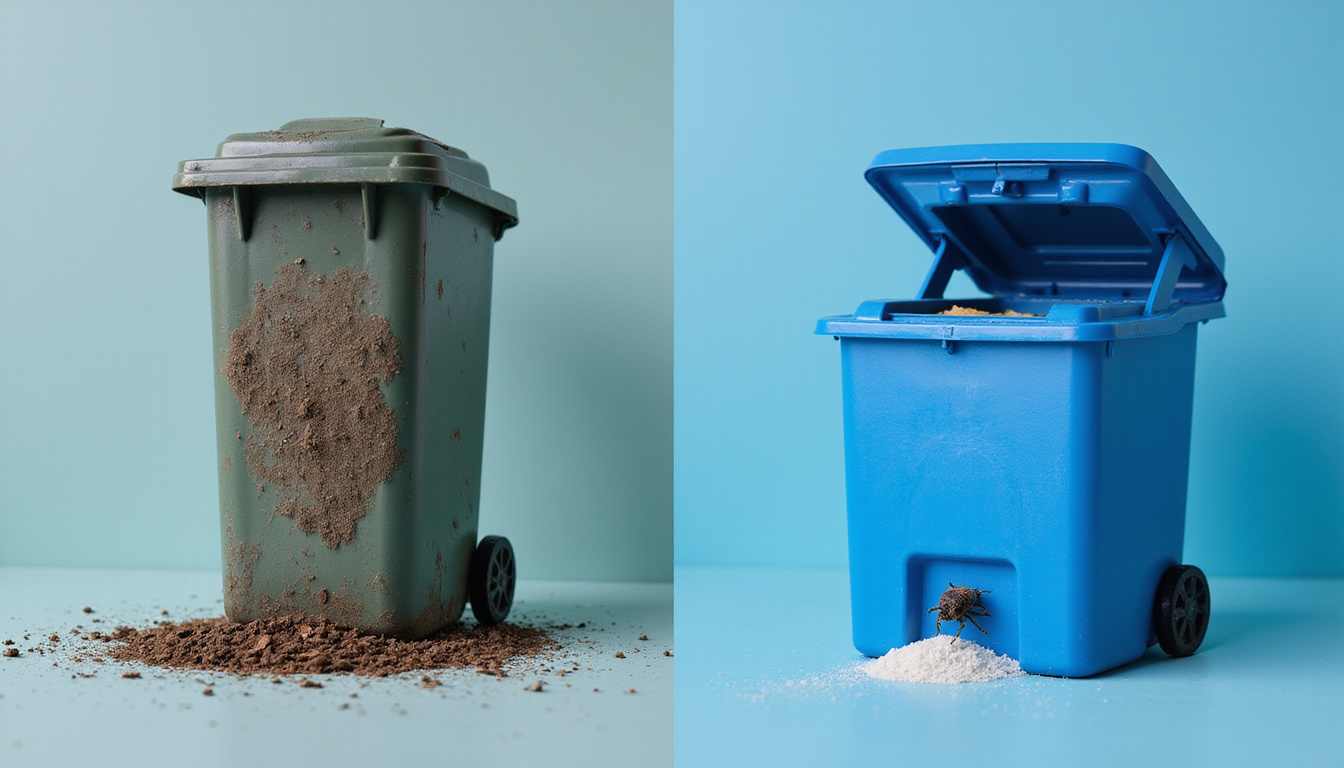
Odor-busting hacks that really work
Even with regular bin cleaning, strong trash (fish, meat, diapers) can smell awful. These hacks reduce odor between cleanings:
- Baking soda layer: Sprinkle 2–3 tablespoons in the bottom of the bin before inserting a new bag. It absorbs odors and dampness.
- Cat litter in a sock: Fill an old sock or mesh bag with unused clumping cat litter, tie it, and place it at the bottom of the bin (under the liner if there’s space). It acts like a mini dehumidifier and odor trap.
- Coffee grounds: Spread used, dried coffee grounds in a shallow container and place it at the bottom of the bin (for indoor bins). Coffee absorbs smells and adds a more pleasant scent.
- Essential oil cotton balls: Put a few drops of tea tree, eucalyptus, or lemon oil on cotton balls and tuck them under the bin liner edges. This adds a fresh scent and offers mild antibacterial benefits.
How to maggot-proof and pest-proof your bins
Flies and maggots are often the worst part of neglected bin cleaning. Prevention is much easier than getting rid of an infestation.
Smart trash habits
-
Wrap food scraps tightly
Double-bag meat, fish, and dairy waste, or wrap them in newspaper before placing in the bin. -
Drain liquids
Pour leftover sauces, cooking oil, and drinks into a separate container for proper disposal instead of into your bin liner, where they accelerate rot and smell. -
Close lids fully
Make sure bin lids close properly after each use. Flies, rodents, and raccoons love half-open lids. -
Don’t overfill
Overstuffed bins push the lid up, inviting pests and increasing smell and spill risk.
Quick maggot removal if it’s too late
If maggots have already arrived:
-
Boiling water flush
Pour boiling water over maggots and along the sides and bottom of the bin. This kills them quickly. -
Salt or lime sprinkle
While still wet, sprinkle table salt or garden lime over affected areas to dry them out. -
Deep clean
Follow with a full bin cleaning: scrub with soap and baking soda, rinse thoroughly, and deodorize with vinegar. -
Dry thoroughly
Completely dry the bin in the sun; heat and UV help kill lingering bacteria and discourage pests.
Outdoor wheelie bin vs. indoor trash can: key differences
Both need bin cleaning, but how you maintain them differs.
Outdoor wheelie bins
- Frequency: Deep clean every 4–8 weeks, more often in hot weather.
- Focus: Pests, maggots, and heavy smells.
- Best tools: Garden hose, long-handled brush, sturdy scrub pads, rubber gloves.
- Extras: Consider bin liners or heavy-duty bags for especially messy waste; they reduce residue and make cleaning easier.
Indoor kitchen bins
- Frequency: Quick wipe weekly; deep cleaning every 2–4 weeks.
- Focus: Daily food odor, cross-contamination with food prep areas.
- Best tools: Mild dish soap, microfiber cloth, small scrub brush or old toothbrush for lid crevices.
- Extras: Use a removable inner bucket if possible – it’s much easier to wash in a sink or tub.
Simple maintenance habits that keep bins fresh
The secret to easy bin cleaning is not letting grime build up in the first place. Add these habits to your routine:
-
Always use liners
A good-quality bin liner is your first defense against leaks, stains, and odors. Double-bag especially messy waste. -
Wipe the rim and lid regularly
Every bag change, quickly wipe the rim, handle, and lid with a soapy cloth or disinfectant wipe. These are the main contact points for germs and sticky residue. -
Let bins dry after cleaning
Never put a liner in a wet bin. Moisture encourages mold, mildew, and new smells. Air-dry fully, preferably in the sun. -
Store bins in ventilated areas
Whenever possible, keep outdoor bins in a shaded but well-ventilated area. Heat speeds up decomposition, while airflow helps reduce odor buildup.
Eco-friendly bin cleaning tips
You can keep your bins fresh without harsh chemicals:
- Use biodegradable dish soap and white vinegar as your main cleaners.
- Choose reusable cloths and a sturdy brush instead of disposable wipes.
- Avoid excessive bleach; reserve it only for serious contamination situations.
- Compost appropriate food waste (if local rules allow) to reduce what ends up rotting in your trash bin.
These changes reduce both your environmental impact and your exposure to strong chemical fumes.
Quick reference: bin cleaning checklist
Use this list to make bin cleaning straightforward:
- Empty and shake out loose debris.
- Rinse with a strong spray (hose or shower).
- Scrub inside with:
- Baking soda + dish soap, or
- Vinegar solution, or
- Oxygen bleach (for heavy grime).
- Pay special attention to:
- Corners
- Lid underside
- Handles and rims
- Rinse until water runs clear.
- Deodorize with baking soda or vinegar.
- Dry completely in the sun or with towels.
- Add baking soda or odor absorber to the bottom.
- Insert a fresh liner.
- Wipe exterior handles and lid with soapy water or disinfectant.
FAQ: common bin cleaning questions
How often should I do bin cleaning for my kitchen trash can?
For a typical household, give your indoor kitchen bin a quick wipe-down every week and a full bin cleaning every 2–4 weeks. If you cook a lot, handle raw meat frequently, or notice odors, increase to weekly deep cleans.
What’s the best natural cleaner for garbage bin cleaning?
A combination of baking soda and white vinegar is the most effective natural duo for garbage bin cleaning. Use baking soda for scrubbing and odor absorption, and vinegar diluted with water (1:2) to disinfect and dissolve residue. Rinse well afterward and let the bin dry fully.
Can I pressure wash my outdoor bin instead of manual bin cleaning?
Yes, a pressure washer can make outdoor wheelie bin cleaning faster, especially for heavy grime. Use a mild detergent, keep the pressure moderate to avoid damaging the plastic, and always wear eye protection. After pressure washing, still deodorize (e.g., with baking soda) and let the bin dry completely.
Make bin cleaning a habit and reclaim a fresher home
You don’t have to live with foul-smelling, pest-attracting bins. With a few simple bin cleaning hacks—like baking soda scrubs, vinegar deodorizing, and smarter trash habits—you can keep odors, maggots, and grime under control with surprisingly little effort.
Start by choosing one outdoor wheelie bin and your main kitchen bin today. Give each a 10-minute deep clean, add an odor absorber at the bottom, and set a reminder to repeat the process every few weeks.
If you’d like a printable bin cleaning checklist or tailored routine based on your household size and climate, ask for a custom cleaning plan next—I can build one you can follow step by step.
Junk Guys San Diego
Phone: 619-597-2299
Website: www.junkguyssd.com
Email: junkguyssd619@gmail.com