
When it’s time for BBQ grill removal, a lot of people are surprised by how tricky it actually is. Grills are bulky, often made of mixed materials, and can contain hazardous components like propane or charcoal ash. Tossing them in the regular trash is usually not allowed—and often not safe. The good news: with a little planning, you can dispose of, recycle, or even sell that old grill in a way that’s responsible, legal, and sometimes profitable.
Below is a practical guide to getting that old BBQ off your patio for good.
Step 1: Decide the Best Path for Your Old Grill
Before you start unbolting anything, decide which outcome makes sense for you:
- Disposal – If the grill is completely unusable or severely rusted.
- Recycling – If the main frame and body are still structurally intact.
- Selling or Donating – If it’s functional or can be made functional with minor repairs.
The right BBQ grill removal strategy depends on the grill’s age, condition, and materials, as well as your local waste-management rules.
Ask yourself:
- Does it still ignite and hold heat safely?
- Is rust only cosmetic or is the frame weakened?
- Are replacement parts still available for this model?
- Are you willing to clean and lightly repair it?
Your honest answers will point you to disposal, recycling, or resale.
Safety First: Prepare the Grill for Removal
Whatever you decide, preparing the grill correctly is essential. Grills can contain residual fuel, sharp edges, and heavy components. Start with these universal steps:
-
Disconnect any fuel source
- For gas grills, turn off the gas supply and detach the propane tank or natural gas line.
- For charcoal grills, remove all charcoal and ash.
-
Clean out the interior
- Scrape off excess grease and food residue.
- Remove any loose debris or coals from the bottom.
-
Let everything cool completely
Never attempt BBQ grill removal right after cooking. Make sure coals and components are cold to the touch. -
Wear protective gear
- Work gloves to avoid sharp metal edges.
- Closed-toe shoes, especially when lifting or carrying heavy parts.
Once the grill is clean, cool, and fuel-free, you can move on to your chosen path.
How to Dispose of an Old Grill Responsibly
If the grill is beyond repair or not worth the effort of sale or donation, disposal might be your only option. Still, you can’t just leave it by the curb in many areas.
Check Local Bulk Trash Rules
Your city or county may offer:
- Bulk item pickup on scheduled days.
- Drop-off at a municipal transfer station or landfill.
- Special guidelines for metal appliances and outdoor equipment.
Visit your local solid waste or public works website, search “bulk trash” or “metal disposal,” and confirm:
- Whether grills are accepted as bulk waste.
- If you must remove plastic, wood, or electronics first.
- Any size or weight limits.
Remove Hazardous or Prohibited Components
Before placing the grill out for pickup or transporting it:
- Take off the propane tank (more on that below).
- Remove batteries from electronic igniters or control panels.
- Empty grease trays; some areas treat fats and oils as household hazardous waste if in large quantities.
Never dispose of a full or partially full propane cylinder with household trash—it’s dangerous and typically illegal.
Consider Professional Hauling
If you have multiple large items or no vehicle capable of hauling a grill, a junk removal or hauling service can be a simple solution. Many of these companies combine BBQ grill removal with:
- Proper disposal or recycling of the metal.
- Labor to carry the grill out from your yard or deck.
- Add-on removal of other outdoor junk.
Ask ahead whether they recycle grills or simply take them to the landfill, and choose a service that handles materials responsibly whenever possible.
How to Recycle an Old Grill
Most grills are primarily made from steel, cast iron, stainless steel, and aluminum—all recyclable metals. Recycling is often more eco-friendly than landfill disposal and may even earn you a small amount of money at a scrap yard.
Step 1: Remove the Propane Tank
Propane tanks are pressurized cylinders and must be handled separately:
- Many propane suppliers and tank exchange locations accept old tanks for recycling or safe disposal.
- Some household hazardous waste facilities take them during special collection events.
- Never cut, crush, or open a propane tank yourself.
For safe propane disposal and recycling advice, see guidance from the U.S. Environmental Protection Agency (EPA) (source: EPA Household Hazardous Waste).
Step 2: Disassemble the Grill
While some recycling centers will accept a whole grill, many prefer separated metals. Disassembly also makes it easier to transport.
Remove:
- Side shelves (often mixed metal and plastic).
- Plastic knobs and handles.
- Electronic ignition modules and wiring.
- Grates, burners, flavorizer bars.
- Any wood components.
Keep metals separated if you can: steel vs. aluminum vs. stainless. This can improve your price at scrap yards.
Step 3: Find a Scrap Yard or Metal Recycler
Search for:
- “Metal recycling near me”
- “Scrap yard [your city]”
Call ahead and ask:
- Do they accept household grills?
- Are there any prep requirements (no plastic, tanks removed, etc.)?
- Do they pay for scrap metal, and what is the current rate per pound?
Even if you don’t make much money, you’ll keep a large metal item out of the landfill and give it a second life as raw material for new products.
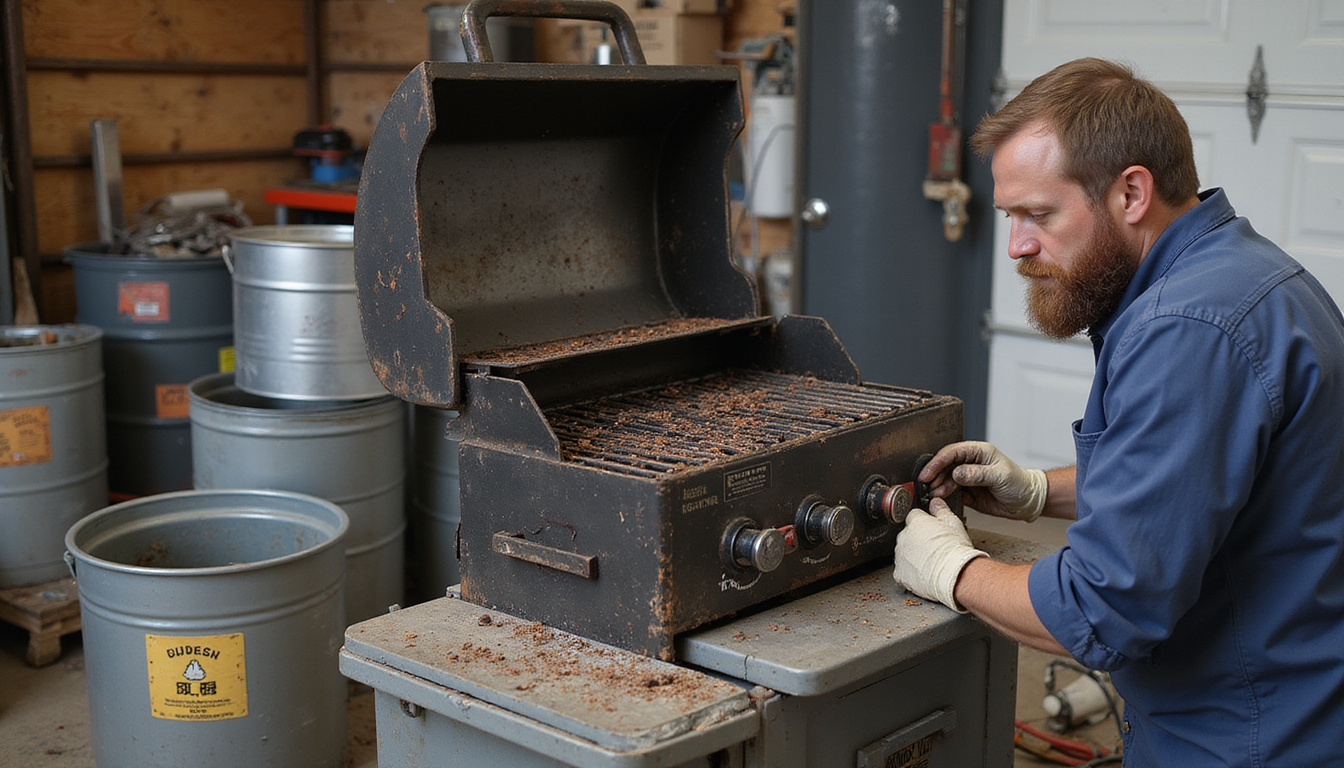
How to Sell or Donate an Old Grill
If your grill still works—or can be made to work with minimal effort—selling or donating it is the most sustainable form of BBQ grill removal. You extend the life of the product and help someone else get a grill for less.
Make the Grill Presentable
A clean grill is far easier to sell:
- Deep clean the grates, remove old grease, and wash exterior surfaces.
- Rust-treat and touch up if necessary, especially on visible areas.
- Replace cheap parts like igniters, knobs, or heat shields if they’re inexpensive and easy to swap.
Keep your total investment low; you want to improve resale value without overspending.
Take Clear, Honest Photos
For online listings:
- Photograph from multiple angles: front, sides, open lid, burners, grates.
- Capture any defects (rust spots, dents, missing parts).
- Include a photo of the model number and brand badge if possible.
Honesty up front reduces back-and-forth and no-shows.
Where to Sell an Old Grill
Good places to list include:
- Local marketplaces (Facebook Marketplace, Nextdoor).
- General resale platforms (Craigslist, OfferUp).
- Community boards or local classifieds.
When writing your listing:
- State brand, model, and approximate age.
- Note any repairs or replacements you’ve done.
- Disclose issues clearly—“igniter doesn’t work; lights with a match” is better than surprise problems.
Price it competitively based on:
- Original cost.
- Current condition.
- Local demand and season (spring and early summer usually yield better results).
Consider Donation
If selling feels like too much hassle or you just want it gone:
- Some charity thrift stores accept outdoor equipment if it’s clean and functional.
- Community centers, churches, or shelters may appreciate a working grill for events.
- Online “free” groups often match items quickly with people who can use or repair them.
Donation can provide a quick, feel-good solution with almost no negotiation.
Special Considerations for Different Grill Types
Not all BBQ grill removal scenarios are the same. Different grill fuels and designs have unique disposal needs.
Propane Gas Grills
Key points:
- Remove the propane tank and dispose of it through a qualified program.
- Disconnect natural gas lines professionally if the grill is hard-plumbed into your home’s system.
- Check for electronic components (ignition modules, LED lights) and recycle those separately as e-waste if possible.
Charcoal Grills
- Ash disposal: Once fully cooled, small amounts can go into household trash if your municipality allows it. Some people mix cooled, additive-free ash into compost or soil in small quantities.
- The body and legs are typically simple metal and relatively easy to recycle.
- Remove any wooden or plastic handles before scrapping.
Electric Grills and Smokers
- These fall partly into electronic waste: motors, heating elements, circuit boards, and wiring.
- Many regions have specific e-waste collection programs for items with electrical components.
- Check with your local recycler whether they handle small appliances and what the requirements are.
Simple BBQ Grill Removal Checklist
Use this quick checklist to stay organized:
- [ ] Turn off and disconnect all fuel sources (propane, natural gas, electricity).
- [ ] Remove propane tanks and set them aside for separate drop-off.
- [ ] Clean out ash, grease, and food residue.
- [ ] Disassemble removable parts (grates, burners, side tables, shelves).
- [ ] Separate metal, plastic, wood, and electronics.
- [ ] Decide: dispose, recycle, sell, or donate.
- [ ] Confirm local rules for disposal or recycling.
- [ ] Arrange transportation or book a junk removal service if needed.
FAQ: BBQ Grill Disposal, Recycling, and Removal
Q1: What is the best way to handle BBQ grill disposal near me?
The best approach is to check your city’s bulk pickup and recycling guidelines. Many municipalities will accept grills as bulk metal if propane tanks and non-metal parts are removed. If you don’t have transportation, a local junk removal company can manage BBQ grill removal and ensure it goes to an appropriate facility.
Q2: Can I schedule BBQ grill pick up for an old gas grill with the propane tank attached?
Typically no. Most haulers and municipal services require the propane tank to be removed before pickup due to safety regulations. Tanks must go to a propane supplier, exchange location, or hazardous waste facility that can safely depressurize and recycle them.
Q3: Is there a way to do BBQ grill recycling for free?
Yes, often there is. Many scrap metal yards accept grills at no charge and may even pay a small amount for the metal. Some local recycling centers or transfer stations also accept grills as scrap metal, especially if you’ve removed non-metal parts and propane tanks in advance.
Proper BBQ grill removal doesn’t have to be complicated or stressful. With a little prep and the right information, you can keep hazardous materials out of landfills, recover valuable metals, and maybe even pass your old grill on to someone who’ll keep using it. Whether you choose to dispose, recycle, sell, or donate, take action now instead of letting that rusting grill occupy valuable space on your patio. Start today by checking your local rules, prepping your grill, and choosing the removal option that fits your time, budget, and values—and enjoy a cleaner, safer outdoor space for your next cookout.
Junk Guys San Diego
Phone: 619-597-2299
Website: www.junkguyssd.com
Email: junkguyssd619@gmail.com