
Planning a kitchen or bathroom renovation usually starts with one messy, intimidating step: cabinet removal. Do it wrong and you can damage your walls, floors, plumbing, or even hurt yourself. Do it right and you save money, preserve your space, and set yourself up for a smoother remodel.
This guide walks you through proven, practical hacks to make cabinet removal easier, safer, and far less expensive—whether you’re DIY-ing or just want to understand what your contractor should be doing.
Why smart cabinet removal matters
Careless cabinet removal can lead to:
- Cracked drywall and damaged studs
- Broken countertops and scratched floors
- Cut or disconnected wiring and plumbing
- Extra disposal fees and unexpected repair costs
Spending a bit more time to plan and prep your cabinet removal can easily save hundreds—sometimes thousands—of dollars in avoidable damage and change orders.
Step 1: Pre-removal planning that prevents disasters
Before you pick up a pry bar, think like a project manager for 30–60 minutes. That planning window can be the single biggest cost-saver.
Map out what’s staying and what’s going
Walk your kitchen or bath and decide:
- Are you keeping any cabinets for reuse in a garage, laundry room, or rental?
- Are appliances staying in place or being moved?
- Is the flooring running under or up to the cabinets?
- Will countertop be removed before or after cabinet removal?
Take photos from multiple angles. These “before” shots help you remember wiring/plumbing locations and can be useful if you resell or reinstall cabinets elsewhere.
Gather the right tools (and backups)
Having the correct tools on hand makes cabinet removal cleaner and safer:
- Stud finder
- Utility knife
- Pry bar (small and large)
- Drill/driver with assorted bits
- Screwdrivers (Phillips and flathead)
- Adjustable wrench and pliers
- Painter’s tape and permanent marker
- Moving blankets and cardboard
- Safety gear: gloves, safety glasses, dust mask, hearing protection
Pro tip: Use a magnetic bowl or small containers to hold screws and brackets by cabinet section. Label them so reinstalling—or selling—those cabinets is easier.
Step 2: Protect your home before you touch a cabinet
Most costly cabinet removal mistakes are really protection mistakes. Fix those first.
Cover surfaces like a pro
- Floors – Lay down thick rosin paper or cardboard, then moving blankets in high-impact zones. Tape seams so debris doesn’t get underneath.
- Countertops – If countertops are staying, double up with moving blankets plus cardboard. Secure edges with painter’s tape.
- Walls and trim – For tight spaces, apply painter’s tape along wall edges where you’ll be prying to reduce paint tear-out.
Disconnect utilities methodically
Turn off power and water before any cabinet removal:
- Electricity: Shut off breakers that control outlets under cabinets, dishwashers, garbage disposals, and over-the-range microwaves. Use a non-contact voltage tester to confirm (source: U.S. Consumer Product Safety Commission).
- Water: Turn off shutoff valves under sinks. Test by opening faucets to fully relieve pressure.
- Gas (if applicable): If you’re unsure how to cap a gas line safely, stop and call a licensed pro—this isn’t a DIY corner to cut.
Label every wire and valve you disconnect with painter’s tape: “DW power,” “Disposal,” “Hot water,” etc. Ten minutes of labeling can save hours of confusion later.
Step 3: Remove doors, drawers, and hardware first
Trying to pull full, assembled cabinets off the wall is a recipe for damage and injury.
Lighten each cabinet
- Take off all doors by removing hinge screws from the cabinet box side.
- Pull all drawers and empty their contents.
- Remove internal hardware: rollout trays, racks, and lazy Susans.
Stack doors and drawers neatly with a blanket between each layer if you plan to reuse or sell them.
Label everything for painless reassembly
Use painter’s tape to label:
- Drawer fronts: “Sink base top left,” “Pantry #3,” etc.
- Doors: “Upper L of window,” “Right of fridge”
- Hardware bags: “Island pulls,” “Pantry hinges”
This simple cabinet removal hack lets you reinstall or rehome your cabinets without a jigsaw puzzle.
Step 4: Countertop and backsplash removal without damage
If countertops sit on top of the cabinets, they must usually come off first. Otherwise, cabinets are locked in place.
Detach countertops safely
- Run a utility knife along the caulk line where countertop meets backsplash and walls.
- From inside base cabinets, look for screws or brackets attaching the countertop to the cabinet frames. Remove them.
- Have at least one helper for heavy materials (granite, quartz, concrete). Supporting the slab while prying is critical to prevent cracking.
If countertops are laminate and destined for the dumpster, you can cut them into sections with a circular saw (depth set just above the thickness) after confirming no wiring or plumbing exists directly underneath.
Loosen backsplash strategically
For tiled backsplash:
- Score caulk along top and side edges.
- Start prying from an outside edge with minimal leverage, working inward.
- If you plan a full gut, don’t stress about saving every tile—focus on minimizing drywall damage.
Step 5: The right way to detach wall cabinets
Upper cabinet removal is where many people crack drywall, strip screws, or drop boxes.
Always work from top to bottom
Never remove base cabinets first; they help support your workspace and occasionally your ladder.
-
Locate mounting points:
- Use a stud finder and check inside the cabinet for screws along the top rail and occasionally the bottom rail.
- Often, cabinets are also joined together through the side walls.
-
Support the cabinet before removing screws:
- Place a temporary support: a T-brace made from 2x4s between countertop (or floor) and bottom of the upper cabinet.
- Have a helper hold the cabinet from below while you remove mounting screws.
-
Remove connector screws between cabinets first, then the screws into studs.
-
Tilt and lower: Once all fasteners are out, slowly tilt the cabinet away from the wall and lower it to the ground.
This top-down, supported approach dramatically reduces the chance of tearing large chunks of drywall or dropping heavy cabinets.
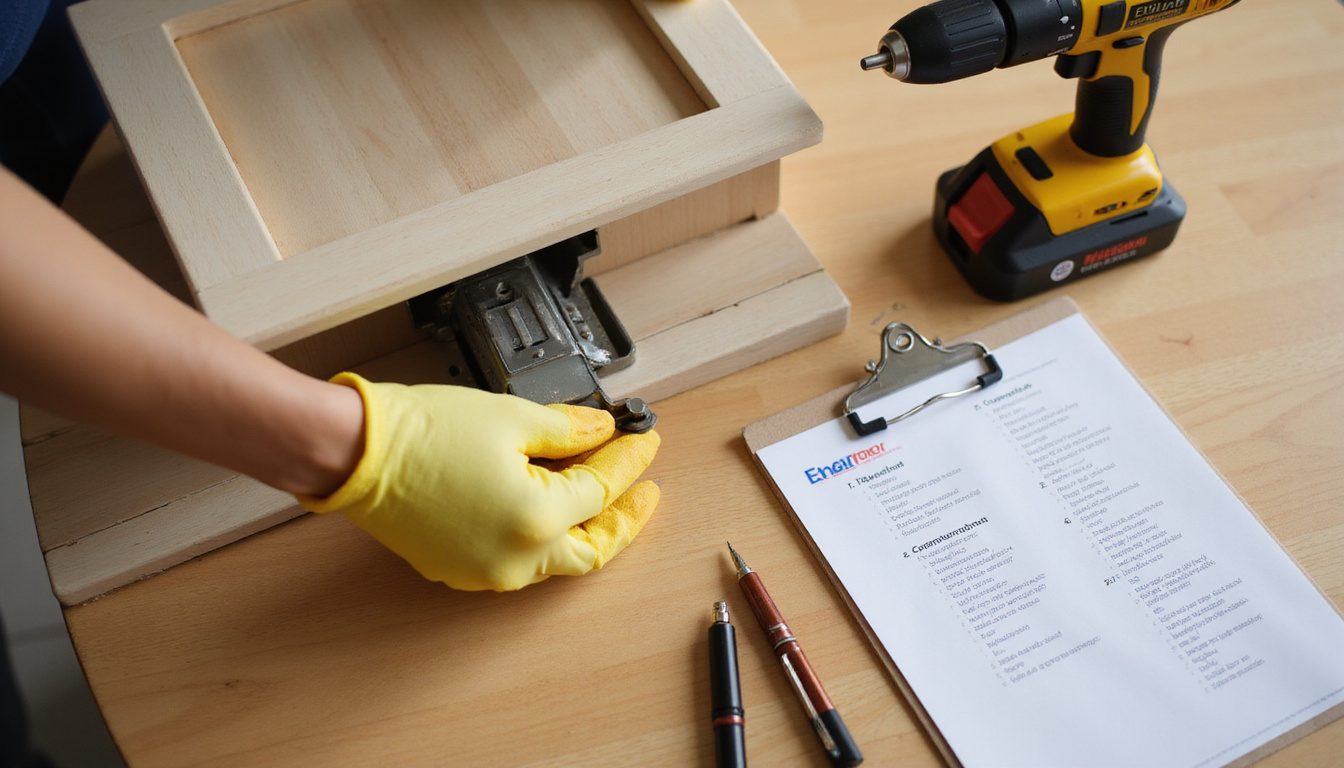
Step 6: Base cabinet removal without wrecking floors and walls
Once uppers are down, you can safely move to base cabinets.
Break the joints before you pry
Base cabinets are usually:
- Screwed to the wall studs through the back
- Screwed to neighboring cabinets through their face frames
- Sometimes nailed or glued at the toe kick area
To avoid ripping out big sections of wall:
- Remove screws linking cabinets to each other first.
- Locate wall screws along the top back rail using your stud finder and a flashlight.
- Score along any caulk line where cabinets meet walls, floors, or appliances.
Lift, don’t drag
When cabinets are free:
- Tilt them forward slightly and lift rather than sliding across floors.
- Use moving blankets or a dolly under heavy sections to avoid scratches.
If flooring does not run under the cabinets (for example, tile installed up to cabinet bases), avoid aggressive prying that can chip tile edges. In some cases, cutting the cabinet base into smaller pieces is safer for the floor than brute force.
Step 7: Special situations that can get expensive fast
Some cabinet removal scenarios deserve extra caution. Rushing these often leads to the “surprise” repairs that blow your budget.
Peninsula and island cabinets
Peninsulas and islands may hide:
- Electrical junction boxes
- Outlets
- Plumbing for prep sinks
- Gas lines for cooktops
Turn off power and open the back or bottom panels before moving anything. Label and safely cap all lines. Don’t yank; deliberate inspection here is much cheaper than fixing ripped-out wiring.
Older homes: lead and asbestos concerns
In homes built before 1978, disturbed paint and some composite materials can contain lead or asbestos. If you’re sanding, grinding, or cutting, consider professional testing and follow EPA Renovation, Repair and Painting (RRP) guidelines for safety.
Step 8: Smart disposal and reuse to save money
How you handle old cabinets at the end of removal can affect your wallet and even your tax bill.
Options for old cabinets
- Repurpose in garage, basement, workshop, or laundry room.
- Sell on local marketplaces if in decent shape.
- Donate to organizations like Habitat for Humanity ReStore, which may offer a tax deduction for qualifying donations.
- Recycle metal hardware and some materials where facilities exist.
When planning your cabinet removal timeline, schedule donation pickup or junk removal in advance so your project area doesn’t get clogged with debris.
Common cabinet removal mistakes to avoid
A quick checklist of what not to do:
- Removing base cabinets before uppers
- Forgetting to shut off and test power and water
- Trying to take cabinets down fully loaded with contents
- Skipping floor and countertop protection
- Using brute force instead of finding and removing fasteners
- Dragging cabinets across finished flooring
- Ignoring hidden plumbing, gas, or wiring in islands and peninsulas
- Tossing everything instead of reselling or donating usable cabinets
Treat this list as your “red flag” reminder while you work.
Quick cabinet removal workflow checklist
Use this numbered checklist on the day of your removal:
- Turn off electricity and water; test and label lines.
- Protect floors, countertops, and nearby walls.
- Remove doors, drawers, shelves, and internal hardware.
- Label all components you may reuse and sort hardware in containers.
- Detach and remove countertops and backsplash as needed.
- Support and remove upper cabinets from top to bottom.
- Disconnect and remove base cabinets, lifting instead of dragging.
- Inspect walls for damage; patch screw holes promptly.
- Organize cabinets for reuse, sale, donation, or disposal.
Keep this list visible so you don’t skip critical steps under pressure.
FAQs about cabinet removal
1. How much does professional cabinet removal cost?
Professional cabinet removal typically ranges from $300 to $1,000+ depending on kitchen size, complexity (islands, peninsulas, tall pantries), and whether disposal is included. If walls need extensive repair or utilities must be rerouted, total project cost can be higher.
2. Can I do DIY kitchen cabinet removal without damaging drywall?
Yes—DIY kitchen cabinet removal is very doable if you take doors/drawers off first, locate and remove all mounting screws, support upper cabinets during removal, and carefully score caulk lines before prying. Expect some minor screw holes and small dings, but large drywall repairs are avoidable with patience.
3. What should I know about bathroom cabinet removal vs. kitchen?
Bathroom cabinet removal usually involves fewer cabinets but more plumbing risk in tight spaces. Shut off and cap all water lines, protect nearby fixtures (toilet, tub, shower), and be especially careful around mirrors and glass. Vanities are often glued to walls or side panels, so more careful cutting and prying may be needed.
Ready to tackle cabinet removal the smart way?
Done thoughtfully, cabinet removal doesn’t have to be chaotic, dangerous, or expensive. With basic tools, a solid plan, and the step-by-step strategies in this guide, you can protect your home, avoid surprise repairs, and even get extra value out of your old cabinets through reuse, resale, or donation.
If you’re planning a remodel soon, start by scheduling your cabinet removal day on the calendar, gathering your tools and protection materials, and deciding which parts you’ll DIY and where a pro might make sense. Take that first organized step now, and you’ll walk into demolition day confident, prepared, and ready to save money instead of spending it on preventable mistakes.
Junk Guys San Diego
Phone: 619-597-2299
Website: www.junkguyssd.com
Email: junkguyssd619@gmail.com