
For most businesses today, commercial recycling is no longer a “nice-to-have”—it’s a strategic advantage. Done well, it can significantly cut operational costs, reduce regulatory risk, and strengthen how customers, employees, and investors see your brand. Done poorly or not at all, it becomes a missed opportunity and, increasingly, a competitive liability.
This guide walks through practical, cost-saving, and reputation-building recycling strategies tailored for commercial operations of all sizes.
Why commercial recycling is a business strategy, not just a sustainability tactic
Commercial recycling sits at the intersection of cost control, compliance, and brand reputation. It affects:
- Waste disposal costs – Landfill tipping fees and hauling charges often rise over time, while many recyclables have stable or even positive value.
- Regulatory compliance – Many cities and states now mandate business recycling (for example, for cardboard or organics). Noncompliance can lead to fines and bad press.
- Stakeholder expectations – Customers, employees, and investors increasingly expect visible, credible environmental action.
According to the U.S. Environmental Protection Agency, recycling and reuse activities in the U.S. accounted for 681,000 jobs and $37.8 billion in wages in 2012, illustrating the economic scale of recycling infrastructure (source: EPA). That infrastructure is what makes commercial recycling both feasible and financially attractive for businesses.
Step one: Get a clear picture of your current waste stream
Before investing in new programs, you need to know what you’re throwing away and what it’s costing you.
Conduct a waste audit
A basic waste audit for commercial recycling typically includes:
- Inventory of waste types – Cardboard, paper, plastics, metals, organics, textiles, electronics, construction debris, etc.
- Volume and frequency – How many containers are filled, how often, and with what mix of materials.
- Contamination levels – Non-recyclable materials in recycling bins and vice versa.
- Cost structure – Current hauling, tipping, container rental, and any surcharge fees.
You can perform a simple internal audit or work with your waste hauler or a third-party sustainability consultant. Even a one- or two-day snapshot can reveal patterns such as:
- Overstocked trash bins and underused recycling carts
- Cardboard or metals going to landfill
- Food waste mixed with general trash in restaurants or offices
Quantify your baseline
Translate your audit into metrics:
- Monthly volume (or weight) of landfill vs. recyclables
- Current monthly cost for waste and recycling services
- Estimated recycling rate (percentage of total waste diverted from landfill)
These baseline numbers will help you design a targeted commercial recycling strategy and later prove the impact to leadership and external stakeholders.
Target the highest-impact recyclables first
Not all materials are equal when it comes to savings and brand value. Focus first on items that are both:
- High volume, and
- Commonly accepted and easy to process
1. Cardboard and mixed paper
For many offices, retailers, and warehouses, corrugated cardboard is the biggest and easiest win.
Tactics:
- Break down boxes to reduce container space and hauling frequency.
- Install cardboard-only compactors or balers in high-volume locations.
- Place labeled paper recycling bins near printers, mailrooms, and desks.
- Work with your hauler to ensure clean, separated cardboard gets the best pricing.
2. Metals and high-value plastics
Manufacturers, auto shops, and some retailers generate valuable scrap metals and plastics.
- Set up dedicated metal bins (aluminum, steel, copper, etc.).
- Store high-value materials securely to prevent theft.
- Investigate buy-back programs or partnerships with local scrap processors.
3. Organics and food waste
If you operate in food service, hospitality, corporate cafeterias, or healthcare, organic waste may dominate your trash stream.
- Implement back-of-house organics collection in kitchens.
- Train staff to separate food waste, paper towels, and compostable serviceware where facilities allow.
- Work with a composting or anaerobic digestion provider to divert these organics from landfill where possible.
Prioritizing these high-impact streams can quickly reduce waste volumes and costs, while making your commercial recycling efforts more visible and meaningful.
Design a system that fits your operations
A successful commercial recycling program must work with, not against, how your business operates daily.
Right-size your containers and collection schedule
Misaligned service levels can erase savings:
- If recycling bins are frequently overflowing while trash containers are half empty, you’re likely overpaying for landfill service.
- Adjusting container sizes and pickup frequency can immediately cut monthly bills.
- Consider internal collection (e.g., centralized sorting stations) to reduce the number of external pickups needed.
Standardize signage and color-coding
Confusing or inconsistent signage leads to contamination, which raises processing costs and sometimes causes haulers to landfilled “recyclables.”
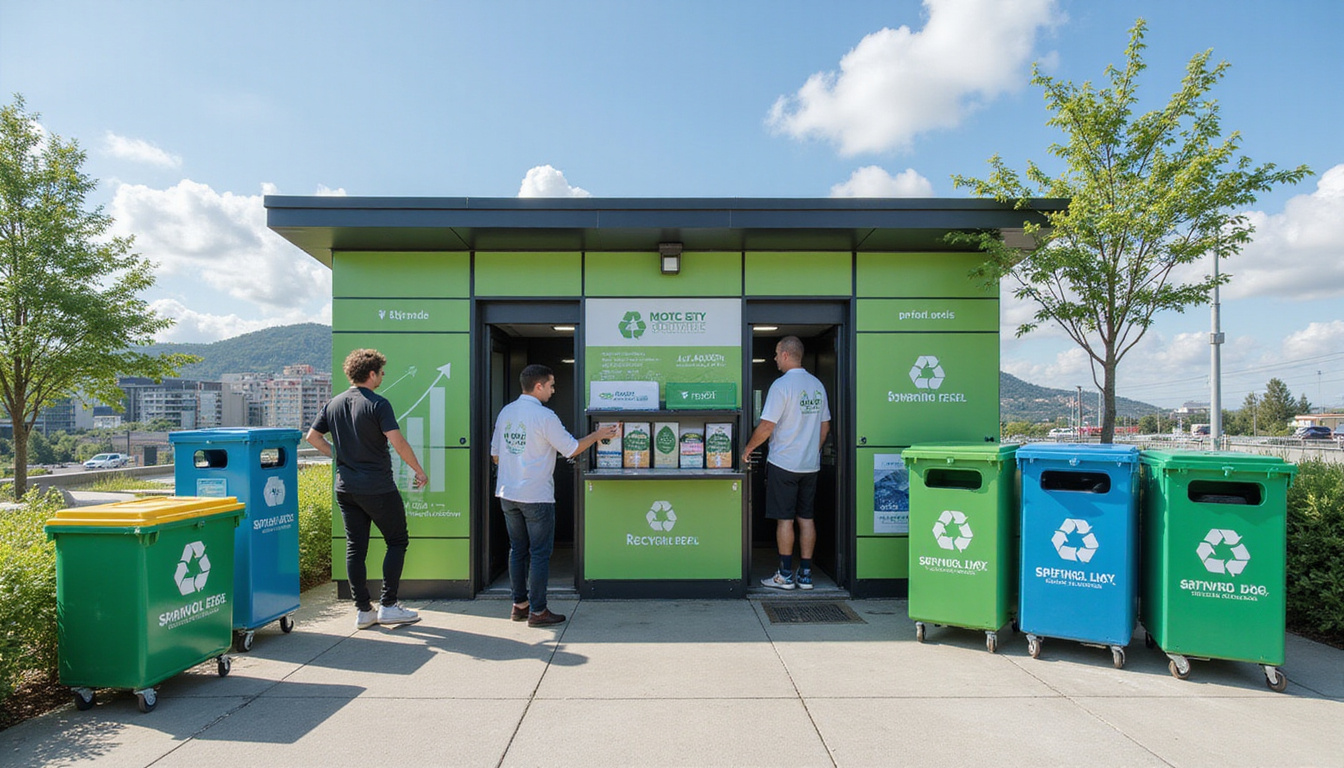
- Use consistent symbols and colors (commonly: blue for recycling, green for organics, black/gray for trash).
- Add photo-based signage showing specific items accepted and not accepted at your site.
- Translate signs into key languages used by your workforce and customer base.
Integrate recycling into core workflows
- Position bins logically: recycling next to printers, organics near breakroom sinks, cardboard balers near loading docks.
- Align cleaning and janitorial tasks to include proper sorting and contamination checks.
- In retail or customer-facing spaces, ensure kiosks, checkout areas, and seating zones all have clear, paired bins.
When commercial recycling aligns seamlessly with everyday tasks, participation and accuracy improve dramatically.
Engage employees and tenants to reduce contamination
Behavior is the linchpin of any commercial recycling system. Even the best infrastructure will fail if people don’t use it correctly.
Make it easy, visible, and expected
- Introduce the program in staff meetings, onboarding, and internal newsletters.
- Provide quick-reference guides or stickers at workstations and prep areas.
- Set up “recycling champions” or green teams to support peers and answer questions.
Offer short, practical training
Fifteen minutes of training can prevent months of contamination:
- Demonstrate “do’s and don’ts” with actual items used at your site.
- Clarify gray areas (e.g., coffee cups with plastic linings, greasy pizza boxes, plastic film).
- Reinforce that contamination can cause recyclables to be rejected and landfilled.
Use data and feedback
- Share monthly diversion rates or contamination trends with staff.
- Celebrate milestones (e.g., “We diverted 5 tons from landfill this quarter”).
- Rotate focus: one month on cardboard quality, another on organics sorting, etc.
Engaged employees and tenants transform commercial recycling from a compliance burden into a point of shared pride.
Leverage partnerships for expertise and savings
You don’t have to build everything from scratch. Strategic partnerships can optimize costs and credibility.
Work closely with your waste and recycling hauler
Proactive collaboration can unlock:
- Customized pricing for high-volume recyclables
- Recommendations on container types and placement
- Access to contamination reports and tonnage data
- Joint training sessions for staff
Ask your hauler about rebates, revenue-sharing, or reduced landfill fees when you meet diversion targets.
Tap local recyclers, nonprofits, and manufacturers
Depending on your location, you may find:
- Textile recycling partners for uniforms and linens
- Electronics recyclers for IT asset disposition with data security guarantees
- Take-back programs from suppliers for packaging, pallets, or end-of-life products
These partnerships expand what your commercial recycling program can handle while aligning with circular economy principles.
Measure, report, and promote your recycling success
To translate your efforts into brand value, you must track and communicate results.
Build a simple measurement framework
Key metrics might include:
- Total waste generated per month or per unit of output (e.g., per employee, per guest, per square foot)
- Recycling and diversion rates (% of material kept out of landfill)
- Cost per ton for landfill vs. recycling services
- Revenue from recyclables (where applicable)
Use these metrics to refine your commercial recycling program and demonstrate ROI.
Connect recycling to broader ESG and brand stories
- Include recycling and waste data in CSR or ESG reports.
- Highlight milestones in press releases, case studies, and marketing collateral.
- Share stories on social media: behind-the-scenes of your recycling setup, employee champions, or partnerships with local recyclers.
When customers see that your commercial recycling strategy is thoughtful, measurable, and long-term, it strengthens trust and brand loyalty.
Advanced strategies to cut costs and enhance reputation
Once your core program is stable, consider going further.
Reduce waste at the source
The most powerful (and cost-effective) waste strategy is not generating it in the first place.
- Shift to reusable packaging and shipping materials where possible.
- Work with procurement to avoid hard-to-recycle products and choose suppliers with take-back programs.
- Encourage digital workflows to cut paper use.
Explore closed-loop and circular partnerships
Closed-loop systems keep materials in circulation as valuable inputs:
- Convert your own scrap materials back into products or packaging.
- Partner with manufacturers who can use your recyclables as feedstock.
- Participate in industry-wide take-back or recycling initiatives specific to your sector.
These efforts go beyond basic commercial recycling, signaling serious commitment to sustainability and innovation.
Pursue certifications and third-party recognition
Certifications send a strong reputational signal:
- LEED (for buildings) often includes credits for waste diversion.
- Zero Waste to Landfill or similar designations show leadership in waste reduction.
- Sector-specific programs (e.g., hospitality, retail, manufacturing) may recognize advanced recycling performance.
Such labels can differentiate your brand in RFPs, investor discussions, and consumer choice.
Practical examples of cost-cutting commercial recycling moves
To illustrate how strategies translate into savings, here are common, high-impact changes many businesses can adopt:
-
Right-size collection
- Reduce trash pickups by moving volume into recycling and organics streams.
- Negotiate contracts so savings from fewer landfill pickups are shared.
-
Bale cardboard on-site
- Compact cardboard reduces hauling frequency and may qualify for rebate pricing from recyclers.
-
Centralize office waste bins
- Replace individual desk trash cans with centralized stations.
- Cuts liner costs and encourages proper sorting.
-
Optimize packaging and purchasing
- Standardize on packaging materials that are widely recyclable.
- Purchase products in bulk to reduce single-use packaging.
-
Separate high-value materials
- Keep metals, certain plastics, or electronics segregated.
- Explore direct sale or rebate programs with specialists.
Over time, these practical steps help your commercial recycling efforts pay for themselves and then some.
FAQ: Common questions about commercial recycling
1. How can a small business start a commercial recycling program without big upfront costs?
Begin with a waste audit and focus on the highest-volume, easiest-to-recycle materials like cardboard and office paper. Use existing collection infrastructure where possible—often your current hauler can provide recycling carts or bins at minimal or no extra cost if you’re diverting material from landfill. Train staff briefly, standardize signage, and adjust your trash pickup frequency as recycling volumes increase to capture savings.
2. What materials are typically included in commercial waste recycling programs?
Most commercial recycling programs accept cardboard, mixed paper, metal cans, and some rigid plastics (often #1 and #2). Many also handle glass in certain markets. Specialized streams—like organics, e-waste, textiles, or construction debris—may require separate services or partners. Check local regulations and your hauler’s guidelines, as acceptable items vary by region and processing facility.
3. How does commercial recycling improve brand image with customers and employees?
Visible, well-run commercial recycling demonstrates that your business takes environmental responsibility seriously. When customers see clear recycling options on-site—or learn about your diversion results in marketing materials—they are more likely to trust and favor your brand. Internally, employees tend to feel more engaged and proud to work for a company that aligns with their values, which can improve retention and productivity.
Turn your waste into a competitive advantage
Commercial recycling is one of the rare initiatives that can lower operating costs, reduce risk, and strengthen brand reputation at the same time. By understanding your waste stream, targeting high-impact materials, designing user-friendly systems, and partnering with the right experts, you can move beyond compliance to true strategic value.
Now is the time to act. Start with a simple waste audit, engage your team, and talk to your current hauler or a recycling specialist about optimization opportunities. Every ton you divert from landfill is not just an environmental win—it’s a statement about who your company is and where it’s headed. Make commercial recycling a core part of your business strategy and turn today’s waste into tomorrow’s advantage.
Junk Guys San Diego
Phone: 619-597-2299
Website: www.junkguyssd.com
Email: junkguyssd619@gmail.com