
If you use propane for home heating, grilling, or backup power, sooner or later you’ll face a key question: how do you handle propane tank removal safely and legally? Whether you’re dealing with a 20‑pound grill cylinder or a large residential storage tank, improper handling can be dangerous and may even violate local regulations.
This guide walks you through what you can (and cannot) do yourself, how to stay safe, and the best ways to recycle or dispose of old propane tanks responsibly.
Why Propane Tank Removal Requires Special Care
Propane is a highly flammable gas stored under pressure. Even an “empty” tank can contain residual gas and vapors that:
- Ignite easily if exposed to sparks, flames, or static
- Expand with temperature changes, increasing internal pressure
- Pose environmental risks if released or discarded improperly
Because of this, propane tank removal is regulated at the local, state, and sometimes federal level. Many landfills, scrap metal yards, and recycling centers will not accept propane tanks unless they’ve been professionally emptied and certified safe.
Key implications for homeowners:
- You generally should not cut, puncture, or attempt to dismantle a tank.
- You often cannot legally throw tanks in the household trash or standard recycling.
- Professional services are usually required for large stationary tanks.
Step 1: Identify Your Type of Propane Tank
Before planning propane tank removal, identify what kind of tank you have. Different sizes and configurations have different rules and safe handling practices.
Common Types of Propane Tanks
-
Disposable Camping Cylinders (1 lb “green” bottles)
- Used for camp stoves, lanterns, small heaters
- Often labeled as “non-refillable”
- Have special disposal rules; never refill unless explicitly designed for it
-
Portable Grill Cylinders (20–40 lb)
- Most common backyard BBQ size (20 lb)
- Often exchanged at retail kiosks or refilled at gas stations
- Typically owned by you, unless part of an exchange program
-
Medium Cylinders (50–100 lb)
- Used for small heaters, construction sites, some appliances
- Heavier and trickier to move safely
-
Residential ASME Tanks (120–1000+ gallons)
- Above-ground or buried
- Provide fuel for whole-house heating, water heaters, generators
- Usually owned or leased from a propane supplier
For anything larger than a portable cylinder, professional propane tank removal is the only safe and legal option.
Step 2: Understand Ownership and Legal Responsibilities
Before you touch the tank, confirm who owns it:
-
Leased tanks (common for whole-house systems) belong to the propane company.
- You are typically not allowed to remove, move, or alter them.
- Call the provider; removal or pickup is usually part of your service agreement (sometimes for a fee).
-
Owned tanks and cylinders are your responsibility.
- You are responsible for safe storage, maintenance, and final disposal.
- You still must follow all local codes and hazardous waste rules.
Review your last propane invoice or service agreement, or call your provider, to confirm whether your tank is leased or owned.
Step 3: Safety Precautions Before Any Propane Tank Removal
Regardless of size, follow basic safety precautions:
- Work outdoors only – never handle or disconnect tanks in enclosed spaces like basements or garages.
- Keep ignition sources away – no smoking, open flames, power tools, or spark-producing equipment nearby.
- Wear basic PPE – gloves and safety glasses protect against minor leaks or frostbite from cold fittings.
- Check for leaks – if you smell gas (rotten egg odor), hear hissing, or suspect leakage:
- Move away from the area.
- Keep others clear.
- Call your propane provider or local fire department.
If you have any doubts about the condition of the tank, err on the side of caution and call a professional.
Step 4: Removing Small Portable Propane Cylinders
For 1 lb camping bottles and 20 lb grill cylinders, you can usually handle removal and recycling yourself if you follow the right steps.
A. 1 lb Disposable Camping Cylinders
These seem simple, but they are pressurized containers and must be treated carefully.
-
Use up as much fuel as possible
- Run your appliance until the flame goes out.
- Turn off the appliance and disconnect once cool.
-
Check local disposal rules
- Many areas consider these hazardous waste.
- Look for instructions from your city or county solid waste authority, often under “household hazardous waste” or “propane cylinders.”
-
Take to approved drop-off
- Household hazardous waste events
- Specialized recycling centers
- Some outdoor retailers or campgrounds accept them
Never puncture or crush camping cylinders unless using a manufacturer-approved device and only where regulations allow it. Even then, follow all instructions exactly.
B. 20 lb Grill Cylinders
These are widely reused and recycled, making propane tank removal straightforward if the cylinder isn’t severely damaged.
- Close the valve fully (turn clockwise until tight).
- Disconnect the hose from your grill or appliance.
- Inspect the cylinder
- Look for heavy rust, dents, damaged valves, or expired certification (look for a date stamp on the collar; most cylinders must be requalified after 10–12 years in the U.S. (source: U.S. DOT regulations)).
- Choose one of these options:
-
Tank exchange program
- Bring it to a participating retailer (e.g., home improvement stores, grocery stores).
- They will take your old cylinder and give you a refilled, inspected one for a fee.
- This is often the simplest and safest route.
-
Refill station
- If the cylinder is still within its certification date and in good condition, you can have it refilled.
- Not a removal option if your goal is to get rid of the tank, but good for continued use.
-
Recycling or scrap metal
- If the cylinder is too old or unsafe, many propane dealers will accept it for proper disposal.
- Some scrap yards accept tanks only if they have been professionally purged and valves removed.
Never throw grill cylinders in curbside recycling or the trash. Waste workers are injured every year by exploding cylinders tossed in compactors.
Step 5: Removing Large Residential or Commercial Propane Tanks
This is where DIY must stop. Large above-ground or underground tanks require trained technicians and specialized equipment.
Why You Need Professionals
- Tanks may contain significant residual propane and vapors.
- Proper removal often requires purging, inert gas filling, and pressure testing.
- Tanks may be connected to multiple appliances and regulators.
- Underground tanks might be subject to environmental and excavation regulations.
Typical Professional Propane Tank Removal Process
While procedures vary, a licensed propane company or contractor will usually:
- Shut off the gas supply at the main service valve.
- Disconnect and cap gas lines feeding your home or business.
- Pump out usable propane into a service truck, if possible.
- Purge remaining vapors using approved methods (e.g., inert gas).
- Physically remove the tank
- For above-ground tanks: lift with appropriate equipment.
- For underground tanks: excavate carefully to avoid line damage and soil contamination.
- Transport the tank
- For refurbishment and reuse, or
- For cutting, recycling, or scrapping at a certified facility.
In many regions, you’re not legally allowed to transport large propane tanks without proper permits and equipment, another reason to rely on professionals.
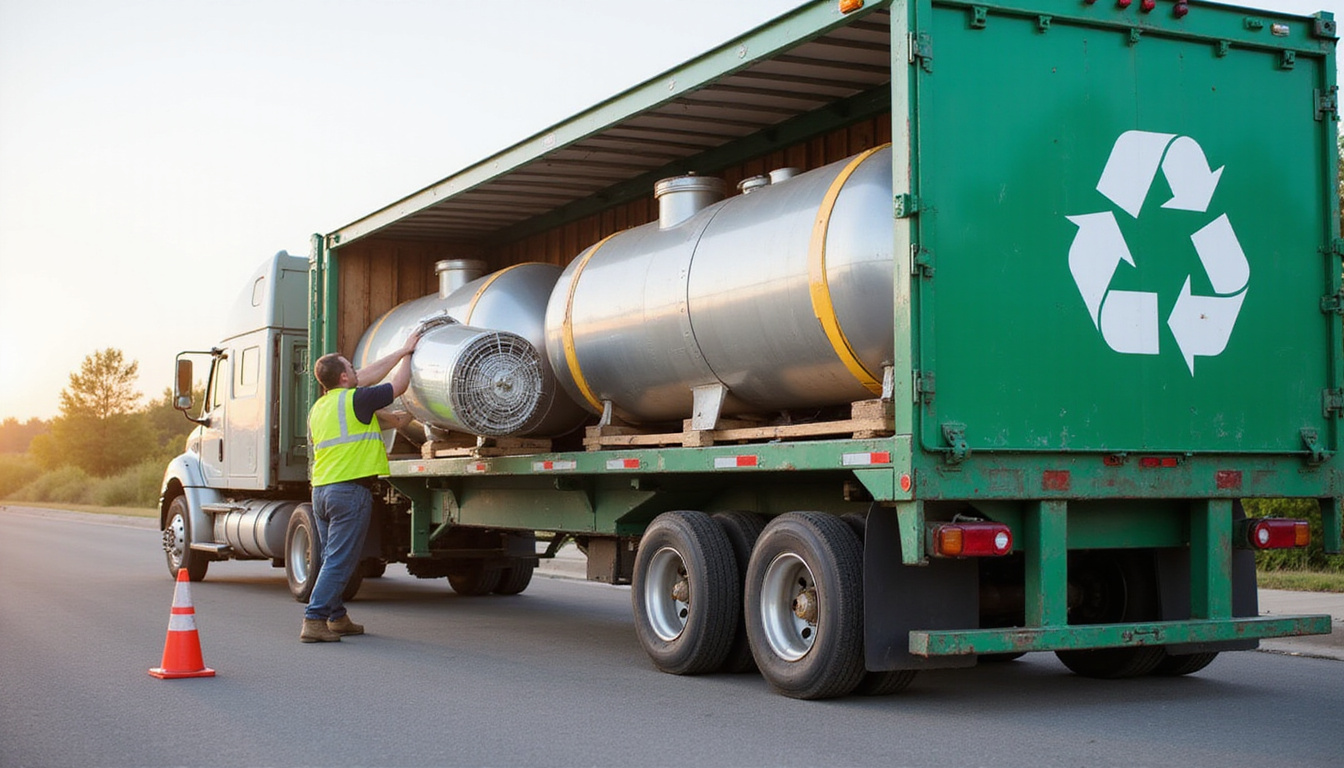
Step 6: Recycling and Reusing Propane Tanks
Sustainable propane tank removal focuses on reuse and recycling rather than disposal.
Reuse Options
- Requalification – Older but structurally sound cylinders can be inspected, recertified, and reused.
- Exchange programs – Your old tank becomes part of a closed-loop system.
- Repurposing (with caution) – Only after being professionally emptied and rendered non-pressurized, some tanks are turned into smokers, fire pits, or art.
- Never cut or weld on a tank unless you have expert confirmation it’s gas-free and safe. This is a serious explosion hazard for DIYers.
Recycling Options
- Through propane dealers – Many providers collect out-of-service tanks and ensure they’re processed safely.
- At specialized scrap yards – Only if the tank meets their intake requirements (purged, valve removed, documented safe).
- Municipal programs – Some localities run dedicated propane cylinder recycling programs for residents.
According to the U.S. Environmental Protection Agency, pressurized cylinders pose risks when improperly discarded and should be managed through designated recycling or hazardous waste programs whenever possible (source: EPA guidance on household hazardous waste).
What Not to Do During Propane Tank Removal
To protect yourself and others, avoid these common (and dangerous) mistakes:
- Do not throw propane tanks in household trash or curbside recycling.
- Do not store unwanted tanks in hot, enclosed spaces (attics, vehicles, sheds in summer).
- Do not attempt to burn off gas in an unvented area or near buildings, trees, or vehicles.
- Do not cut, drill, or weld any propane tank unless you are a trained professional with proper equipment and permits.
- Do not attempt to remove a leased residential tank without your propane company’s involvement.
Quick Checklist for Safe Propane Tank Removal
Use this list as a reference when you’re ready to remove a tank:
- Identify the tank type and size.
- Confirm ownership (leased vs. owned).
- For small cylinders:
- Use up remaining gas safely.
- Close the valve and disconnect.
- Check local disposal/recycling rules.
- Take to an exchange, dealer, or hazardous waste facility.
- For large tanks:
- Contact your propane provider or a licensed contractor.
- Schedule professional pumping, purging, and removal.
- Keep all tanks away from heat, flames, and enclosed spaces until removed.
- Keep documentation or receipts of removal for your records, especially for property sales or insurance.
FAQ: Common Questions About Propane Tank Removal and Disposal
Q1: How do I dispose of old propane tanks from my grill?
For typical 20 lb cylinders, the safest method is to take them to a tank exchange location or back to a propane dealer. Most exchange services accept old tanks, even if they’re rusty or out of date, and handle recertification, recycling, or scrapping for you. Do not put grill tanks in curbside recycling or the trash.
Q2: Can I recycle propane cylinders through my local recycling bin?
In almost all areas, no. Propane cylinders are pressurized and can explode in compactors or sorting equipment. Instead, use propane tank recycling channels such as retailer exchange programs, household hazardous waste facilities, or approved scrap yards that explicitly accept purged cylinders.
Q3: Who do I call for underground propane tank removal?
Contact your propane supplier first—they may own the tank and be contractually responsible for it. If you own the tank, ask them or your local building department to recommend a licensed contractor experienced in underground propane tank removal. They’ll manage pumping, purging, excavation, and safe transport.
Take the Safe, Legal, and Eco-Friendly Route
Propane makes modern life more convenient, but the tanks that store it are not ordinary scrap metal. Whether you’re clearing out old grill cylinders or planning a full residential propane tank removal, handling these containers properly protects:
- Your family and neighbors from fire and explosion risks
- Waste workers and recycling facility staff
- The environment from uncontrolled gas release and metal waste
- You from potential fines or legal issues
Your next step is simple:
- For small cylinders, locate the nearest exchange program, propane dealer, or hazardous waste facility and plan a drop-off.
- For large or buried tanks, call your propane provider today and ask about inspection and removal options.
Act now to schedule safe propane tank removal, and you’ll gain peace of mind knowing your old unit is handled correctly—from your property all the way through to responsible recycling.
Junk Guys San Diego
Phone: 619-597-2299
Website: www.junkguyssd.com
Email: junkguyssd619@gmail.com