
A smartly planned garage sale cleanout can turn clutter into real cash in just a day or two—if you do it right. Instead of dragging boxes to the curb and hoping for the best, a bit of strategy can help you sell more, clear faster, and end the weekend with both extra space and extra money. This guide walks you through exactly how to plan, price, display, and promote your sale so it actually works.
Step 1: Decide Your Goal for the Garage Sale Cleanout
Before you touch a single box, get clear on your main objective. It will shape every decision you make.
Most people fall into one of three categories:
- Maximize profit – You want to squeeze as much money out of items as you reasonably can.
- Clear as much stuff as possible – You care more about space than dollars.
- Balanced approach – You want decent earnings but your top priority is getting things out of the house.
If your goal is:
- Profit-focused: You’ll price a bit higher, consider listing premium items online, and be more selective about bulk deals.
- Space-focused: You’ll price low, bundle aggressively, and have a firm “everything must go” mindset.
- Balanced: You’ll price fairly, negotiate freely, and have a post-sale plan for unsold items.
Write your primary goal on a sticky note and keep it visible during the entire garage sale cleanout process. It will keep you from overthinking every little decision.
Step 2: Sort, Declutter, and Choose What Really Belongs in the Sale
The “cleanout” part starts long before the sale date. This is where the real work—and the potential profit—begins.
Use a Simple 4-Pile System
As you move room by room, create four categories:
- Sell at the garage sale – Everyday items in good, usable condition.
- Sell elsewhere – Higher-value or niche items better suited to online marketplaces.
- Donate or give away – Still-usable items not worth pricing and haggling over.
- Trash/recycle – Broken, stained, unsafe, or heavily damaged items.
Common garage sale items:
- Clothing, shoes, outerwear
- Toys, games, puzzles
- Kitchenware (dishes, mugs, utensils, small appliances)
- Tools and hardware
- Home décor, frames, art
- Books, DVDs, CDs
- Small furniture, shelves, chairs
- Sports equipment, camping gear
Better sold elsewhere (online or consignment):
- Brand-name electronics
- High-end designer clothing or handbags
- Collectibles, vintage items, rare books
- Pristine furniture sets
A good rule: if you’d be upset selling it for $5, it probably belongs on Facebook Marketplace, eBay, or a local buy/sell group instead of the yard.
Step 3: Clean, Fix, and Group Items to Boost Perceived Value
Presentation matters more than most people think. A clean-out sale doesn’t mean items should look like they came straight out of the attic.
Quick Clean-Up Checklist
- Wipe down surfaces on furniture, toys, and decor.
- Wash clothing and linens; fold or hang them neatly.
- Dust and polish electronics and small appliances.
- Bundle small parts (remote controls, cords, screws) in baggies and tape them to the item.
- Test anything that plugs in, lights up, or has moving parts.
A few minutes spent cleaning can easily raise what buyers are willing to pay—and can be the difference between “no thanks” and “I’ll take it.”
Group Items Logically
During your garage sale cleanout, sort items into zones:
- “Kitchen & Household”
- “Kids & Toys”
- “Clothing & Accessories”
- “Tools & Outdoors”
- “Books, Media & Office”
When people see organized areas, they’re more likely to browse longer and buy more—because it feels more like a small shop than a random pile of stuff.
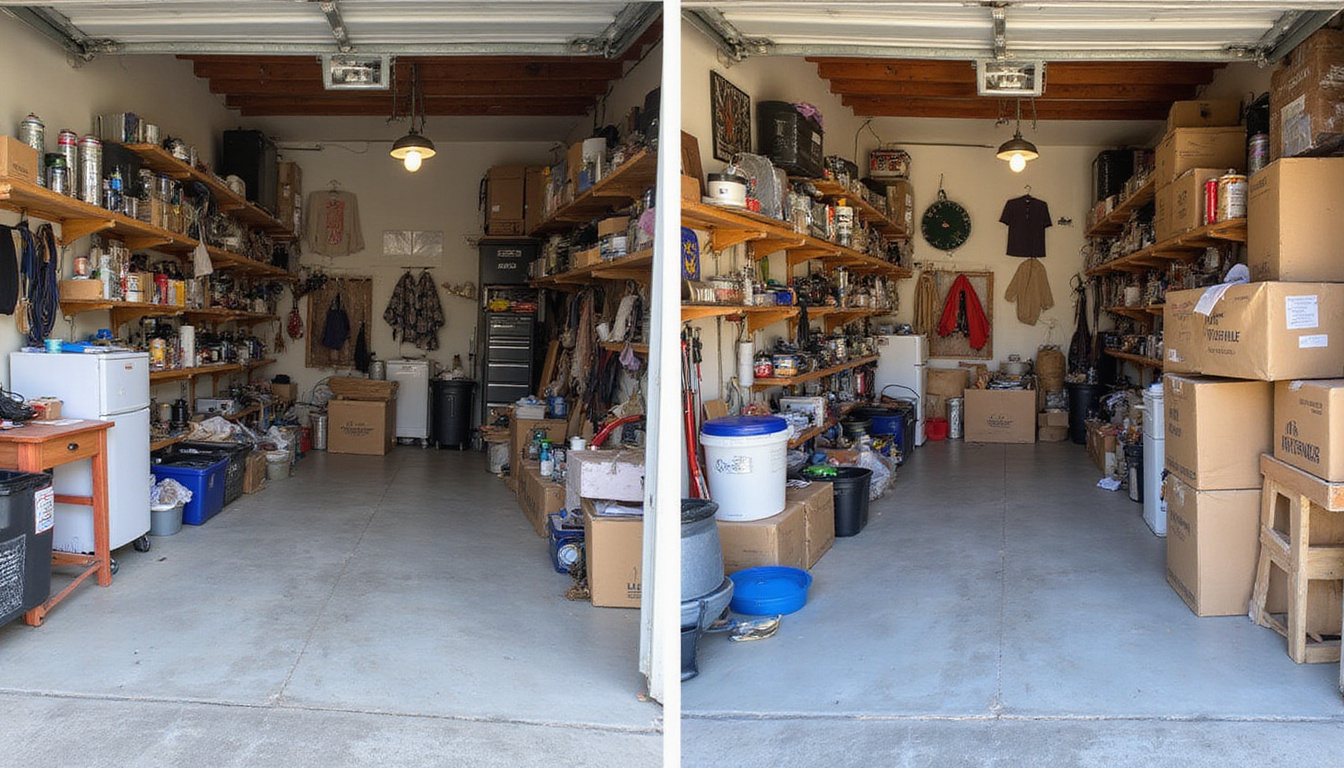
Step 4: Price Strategically (So Things Actually Sell)
Pricing is where many garage sale cleanouts fail. Too high and people walk away; too low and you miss out. Aim for realistic, not sentimental.
General Pricing Guidelines
A common rule of thumb is around 10–25% of the original retail price for items in good shape, then adjust based on condition and demand.
Typical ranges:
- Paperback books: $0.25–$1
- Hardcovers: $1–$3
- DVDs/CDs: $0.50–$2
- Adult clothing: $1–$5
- Kids’ clothing: $0.50–$3
- Small appliances: $3–$15
- Basic furniture: $10–$50
- Toys/games: $0.50–$5
Use Simple, Clear Price Tags
- Use painter’s tape or stickers; label each item or use clearly marked signs for sections (e.g., “All books $1”).
- Avoid messy, faint handwriting—make it easy to read from a distance.
- For clothing, consider “fill a bag for $5” later in the day to clear bulk inventory.
If in doubt, price slightly higher than your rock-bottom number and expect to negotiate. That keeps buyers happy and you still get at least what you really wanted.
Step 5: Plan the Perfect Layout for Flow and Safety
Your setup can make or break your garage sale cleanout. Aim for a layout that’s easy to walk, inviting to browse, and safe for all ages.
Layout Tips That Boost Sales
- Bring items out onto the driveway or yard when possible; it looks more inviting than a dark garage.
- Put eye-catching items near the road – bikes, furniture, colorful toys.
- Place “hot” categories up front – kids’ items and tools often draw serious buyers quickly.
- Keep a clear path so people can move easily, even with strollers or bags.
- Use tables instead of the ground whenever possible, especially for smaller items.
Safety matters too. Keep fragile glass items away from where kids will run, and avoid creating tripping hazards with cords or boxes.
Step 6: Advertise Your Garage Sale Cleanout the Smart Way
Even the best-organized sale won’t make money if no one shows up. A few targeted steps can triple your traffic.
Where to Promote Your Sale
- Community Facebook groups – Include date, time, address, and photos of standout items.
- Garage sale listing websites such as YardSaleSearch, GarageSaleFinder, or Craigslist.
- Neighborhood apps like Nextdoor.
- Old-school flyers at community centers, coffee shops, or bulletin boards (if allowed).
Include:
- Address and cross streets
- Dates and start/end times
- Rain plan, if any
- Teaser list: “Kids’ clothes, tools, furniture, kitchen items, baby gear”
According to consumer research, price and convenience drive most secondhand purchases, and many shoppers intentionally look for used options to save money and reduce waste (source: U.S. Bureau of Labor Statistics).
Step 7: Make Attention-Grabbing Signs That Actually Work
Signs are your real-world “SEO” for a garage sale cleanout. You want simple, readable, and consistent.
Sign-Making Guidelines
- Use large poster board in a single bright color for all signs.
- Thick black marker only; no cursive or tiny text.
- Keep text ultra-simple:
- “GARAGE SALE”
- Big arrow
- Date and time
- Place signs at all major entry points into your neighborhood and at each turn.
- Check visibility from a car: stand 30–50 feet away and see if you can read it in 2–3 seconds.
Limit extra details. People driving by can’t read a full paragraph.
Step 8: Prepare for the Day: Cash, Comfort, and Logistics
The night before your garage sale cleanout, set everything up so you’re not scrambling at 7 a.m.
Essential Prep Checklist
- Cash box or pouch
- Around $80–$100 in change (small bills and coins)
- Calculator (or phone with calculator)
- Extra bags, boxes, and newspaper for wrapping fragile items
- Extension cord for people to test electronics
- A “payments” sign if you accept apps (Venmo, PayPal, etc.)
- Sunscreen, water, snacks, and a chair
- A helper, if possible, for breaks and rush times
Aim to open at least 30 minutes earlier than your posted time—bargain hunters and “dealers” often arrive early, and they tend to buy a lot.
Step 9: Negotiate Without Stress (and Still Hit Your Goals)
Haggling is part of the culture of garage sale cleanouts. Expect it and you’ll be less frustrated.
Simple Negotiation Rules
- Decide in advance: are you okay with offers of 50–75% of asking price?
- For low-priced items (under $2), don’t sweat every penny—bundle and move on.
- Use phrases like:
- “I could do $X” instead of “no.”
- “If you buy these too, I can give you a better deal.”
- Offer bundle discounts (“Take all the DVDs for $10”) to move groups of items quickly.
By late morning or early afternoon, shift toward more aggressive deals if your main goal is space-clearing.
Step 10: Have a Post-Sale Plan for Leftovers
A successful garage sale cleanout doesn’t end when you close the cash box. The real win is when the stuff is gone.
Smart Ways to Clear What’s Left
- Donation pickups: Schedule a charity pickup or drop off items the same day if possible.
- Free curb alert: List remaining items as “free” on local online marketplaces or curb alerts.
- One more day: If you had strong turnout, consider a second, shorter day with “half-price everything” prominently advertised.
Try not to bring unsold items back into the house “just in case.” That’s how clutter quietly re-accumulates.
Quick Garage Sale Cleanout Checklist
Use this as a simple reference as you go:
- Define your main goal (profit vs. space).
- Declutter room by room with a four-pile system.
- Clean and group items into logical categories.
- Price realistically and label clearly.
- Plan a safe, shopper-friendly layout.
- Advertise online and in your neighborhood.
- Make bold, readable directional signs.
- Prepare cash, supplies, and helpers.
- Negotiate and bundle to move inventory.
- Donate, give away, or list leftovers immediately.
FAQ: Common Questions About Garage Sale Cleanouts
Q1: How do I know if something is worth selling at a garage sale vs. donating?
If an item is in good condition and you’d be satisfied getting a few dollars for it, it’s perfect for a garage sale cleanout. If it’s very low-value (like promotional T‑shirts) or heavily worn, donation is usually better. For items that might be worth more than $20–$30, quickly search online sold listings to see if they’re better suited to online resale.
Q2: How long should a garage sale cleanout last for best results?
Most sales perform best in a 4–6 hour window, typically from about 8 a.m. to early afternoon. The most serious buyers arrive within the first two hours. Extending far into the afternoon usually brings diminishing returns, so focus your energy on a strong morning.
Q3: What day of the week is best for a big garage sale cleanout?
In many areas, Saturday morning draws the biggest crowds. In some communities, Friday mornings can work if there are many retirees or remote workers. Check local norms by scanning online listings in your area for a few weeks beforehand, then match the most common day and time.
Clearing a home doesn’t have to mean endless trips to the dump or donation center. With some planning, your garage sale cleanout can become a fast, organized way to reclaim space and put real cash back in your pocket.
Pick a weekend, block it on your calendar, and start sorting one room at a time. Each box you price and set out is another step toward a cleaner, lighter home—and a more rewarding sale day. If you’re ready to sell more and clear faster, begin your cleanout this week and set your garage sale date now while the motivation is fresh.
Junk Guys San Diego
Phone: 619-597-2299
Website: www.junkguyssd.com
Email: junkguyssd619@gmail.com