
Whether you’re upgrading to a new fridge or clearing out an old washer, appliance hauling can quickly turn into a stressful, time-consuming job. Between heavy lifting, disposal rules, and potential damage to your home, there’s a lot that can go wrong. With a bit of planning and the right strategy, though, you can save both time and money—and protect your back in the process.
Below are smart, practical tips to make appliance hauling as simple and cost-effective as possible.
1. Decide: DIY appliance hauling or hire a pro?
Your first big decision is whether to handle appliance hauling yourself or hire professionals. Each option has trade-offs in cost, convenience, and risk.
When DIY makes sense
Doing it yourself can be the cheapest option if:
- You already have access to a truck or trailer
- The appliance isn’t extremely large or awkward (e.g., a small dryer vs. a built‑in fridge)
- You have help from at least one other adult
- You’re comfortable lifting and maneuvering heavy objects
DIY works best if you’re hauling over a short distance, such as moving an appliance from one room to another, or transporting it across town to a buyer, recycler, or donation center.
When to hire professional appliance haulers
Hiring a service costs more upfront, but can save you money and hassle in the long run if:
- You’re moving multiple large appliances
- You live in a multi-story building or have tight staircases
- Your appliance needs special handling (built-in, gas line, water line)
- You don’t have the right vehicle or equipment
- You’re on a tight schedule and can’t risk delays or injuries
Professional appliance hauling typically includes the labor, truck, basic protection (blankets, straps), and often disposal or recycling. For heavy or complicated jobs, this can be the most economical choice when you factor in your time and potential damage or medical costs.
2. Plan ahead to avoid last-minute costs
Many unexpected expenses in appliance hauling come from poor planning. A simple, written plan can prevent delays, extra fees, and damage.
Measure everything—twice
Before moving an appliance:
- Measure appliance dimensions (height, width, depth).
- Measure doorways, hallways, stairwells, and elevator interiors.
- Check the path from its current location to the door, and from the door to the vehicle.
If something is too tight, consider removing doors (on the appliance or in your home) or changing the path. Knowing this in advance prevents you from getting stuck halfway through with no way to back out.
Clear a safe path
Remove:
- Rugs, mats, and loose cables
- Small furniture and clutter
- Low-hanging items that could snag
A clear path reduces the chance of tripping, wall damage, and wasted time maneuvering around obstacles.
Schedule smart
If you’re hiring a professional appliance hauling service:
- Book on off-peak days (weekdays instead of weekends) for better rates.
- Avoid last-minute or same-day bookings that may include rush fees.
- If possible, bundle multiple items (e.g., old fridge + washer + dryer) into a single visit.
Good scheduling alone can cut your hauling costs by 10–30%.
3. Prepare appliances properly before hauling
Proper preparation makes appliances lighter, safer, and easier to move—and lowers the risk of damage.
Refrigerator and freezer
- Empty and defrost: Remove all food. Unplug 24 hours in advance so ice can melt.
- Dry thoroughly: Wipe out moisture to prevent mold and odors during hauling.
- Secure shelves and doors: Remove glass shelves and tape or strap doors closed.
- Protect the floor: Use sliders, cardboard, or moving blankets when rolling it out.
Washer and dryer
- Unplug and disconnect: Turn off water supply, disconnect hoses, unplug units.
- Drain remaining water: Run a drain or spin cycle and drain hoses into a bucket.
- Secure cords and hoses: Tape or tie them to the back of the appliance.
- Gas dryers: If gas is involved, hire a licensed professional to disconnect.
Stove and oven
- Electric stoves: Unplug and ensure the power is off.
- Gas stoves: Do not DIY disconnection. Hire a licensed gas technician.
- Remove loose parts: Take out racks, burner grates, and knobs if removable.
- Secure doors: Tape the oven door shut and wrap fragile glass areas.
Dishwashers and other built‑ins
- Shut off power and water: Flip the breaker and shut the water valve.
- Disconnect carefully: Expect water in the hose; use towels or a tray.
- Protect the surrounding cabinets: Built-ins may snag edges during removal.
Thorough prep minimizes hauling time, which is especially important if you’re paying by the hour.
4. Use the right tools and gear for safe, cheap hauling
Investing in or renting basic moving tools can dramatically reduce effort, injury risk, and damage costs.
Essential equipment
- Dolly or hand truck: Appliance dollies with straps are ideal for fridges and washers.
- Moving straps: Shoulder or forearm straps help distribute weight more evenly.
- Furniture sliders: Plastic or felt sliders make it easier to move appliances across floors.
- Moving blankets and stretch wrap: Protect surfaces from scratches and dents.
- Ratchet straps or rope: Secure appliances inside the truck or trailer.
Most of these items can be rented inexpensively from moving or hardware stores, saving you the cost of buying.
Personal protective gear
- Closed‑toe shoes with good traction
- Work gloves for grip and to protect your hands
- A back brace if you’re prone to strain or lifting heavy items
For most people, one minor back injury would cost more than hiring a professional appliance hauling service. Don’t skip safety to save a few dollars.
5. Protect your home and the appliance during the move
Damage to floors, walls, and door frames is one of the most common (and expensive) side effects of appliance hauling. A few simple safeguards can prevent costly repairs.
Protect floors and doorways
- Lay down cardboard or Masonite sheets on hardwood or tile floors.
- Use runners or rugs on carpeted paths.
- Wrap door frames and tight corners with moving blankets or towels.
Lift and move correctly
- Always lift with your legs, not your back.
- Keep the load close to your body and avoid twisting while lifting.
- Use the dolly for as much of the trip as possible instead of manual carrying.
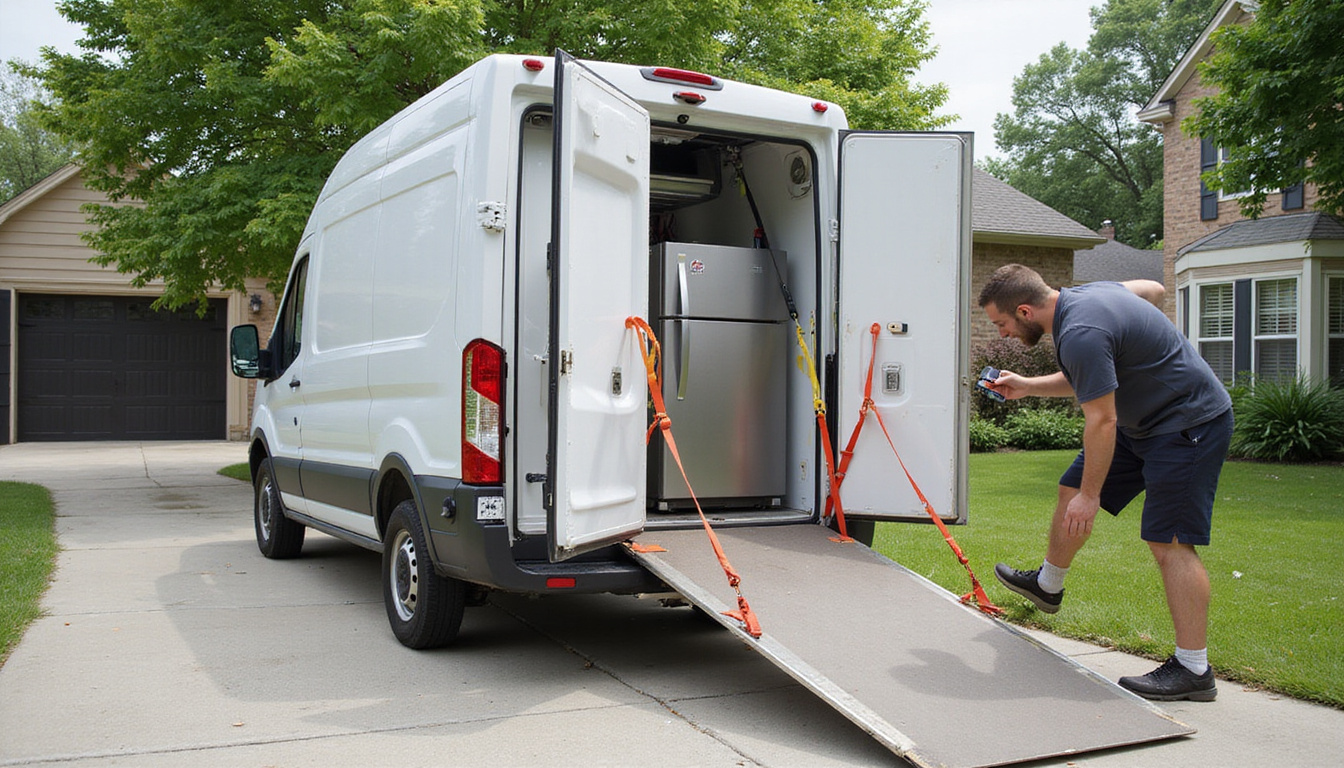
Secure items in the vehicle
- Load appliances upright whenever possible, especially refrigerators.
- Keep heavy items at the front of the truck or trailer to balance weight.
- Use ratchet straps to secure appliances firmly to anchor points.
- Avoid stacking heavy items on top of appliances.
Proper loading prevents tipping, sliding, and damage during transit.
6. Cut costs by choosing the right disposal or reuse option
Where your appliances go after hauling has a big impact on total cost—and sometimes you can even make money.
Sell or give away working appliances
If your appliance still works:
- List it on platforms like Facebook Marketplace, Craigslist, or local buy/sell groups.
- Offer it as “you pick up” to avoid hauling altogether.
- Donate to local charities or thrift stores that accept appliances.
Many people are happy to haul an appliance for free if they can use or resell it.
Use retailer and manufacturer haul-away programs
When buying a new appliance, ask about:
- Old appliance haul-away: Many retailers remove your old unit for a small fee or even free with purchase.
- Rebate programs: Some energy companies and manufacturers offer incentives for recycling older, inefficient appliances (source: U.S. EPA ENERGY STAR).
This can significantly reduce your net haul-away cost.
Take advantage of municipal recycling options
Check with your city or county about:
- Bulk pickup days or curbside collection for appliances
- Drop-off recycling centers
- Special handling for refrigerants (like Freon) in fridges and AC units
Proper disposal is important because appliances often contain metals, refrigerants, and electronics that must be handled under environmental regulations.
7. Avoid common appliance hauling mistakes
Knowing what not to do is just as important as knowing what to do.
Here are some mistakes that waste time and money:
- Underestimating weight or size: Don’t assume you and one friend can lift a double-door fridge.
- Skipping measurement and path planning: Getting stuck mid-hallway is a nightmare.
- Not defrosting or draining: Leaks can damage floors, vehicles, and the appliance itself.
- Using the wrong vehicle: An overloaded car or unsecured trailer is dangerous.
- Hauling hazardous or banned items improperly: Fridges, freezers, and AC units often require certified refrigerant removal.
A bit of upfront research and planning can prevent these costly errors.
8. Simple cost-saving checklist for appliance hauling
Use this quick list to streamline your process and keep your budget under control:
- Decide DIY vs. professional based on weight, access, and your comfort level.
- Measure appliances and all routes (doorways, stairs, hallways, vehicle).
- Schedule smart—bundle items and avoid last-minute bookings.
- Prepare appliances (unplug, defrost, drain, disconnect safely).
- Rent or borrow the right tools: dolly, straps, blankets, sliders.
- Protect your home: cover floors and wrap corners and doorways.
- Plan disposal: sell, donate, recycle, or use a retailer haul-away program.
- Confirm any local rules, especially for refrigerants and large items.
Following this checklist alone can shave hours off the job and significantly reduce overall costs.
FAQ: Appliance hauling and related questions
Q1: How much does appliance hauling typically cost?
Prices vary by location and the type/number of appliances, but expect anywhere from $75 to $200 for single-item appliance hauling, and more for multiple items or difficult access (stairs, long carries). Getting quotes from at least two or three local services helps you find a fair rate.
Q2: What is the cheapest way to get rid of old appliances?
The lowest-cost options for removing appliances usually include: offering them for free with self-pickup, using retailer haul-away when buying new, and taking advantage of city bulk pickup or recycling days. DIY hauling in a borrowed truck can also be inexpensive if you have the right equipment and help.
Q3: Can I haul a refrigerator on its side?
It’s best to transport fridges upright whenever possible. If you must lay it on its side, let it stand upright and remain unplugged for at least the same number of hours it was on its side before turning it on. This allows compressor oil to settle and helps prevent damage. When in doubt, ask a professional appliance hauling service for guidance.
Make your next appliance hauling job effortless
Appliance hauling doesn’t have to mean sore backs, scratched floors, and surprise fees. By planning ahead, using proper equipment, and choosing the right mix of DIY and professional help, you can clear out old appliances quickly, safely, and affordably.
If you’re facing a heavy, awkward, or time-sensitive job, consider reaching out to a reputable local appliance hauling service. Let the pros handle the lifting, disposal, and logistics so you can focus on enjoying your new, upgraded appliances—without the stress and risk of doing it all yourself.
Junk Guys San Diego
Phone: 619-597-2299
Website: www.junkguyssd.com
Email: junkguyssd619@gmail.com